
How does an Alzheimer's drug actually reach the market?
Learn all about the phases and stages of the Alzheimer's trial pipeline, following one real Phase 1 tau study from its first design through what participants experienced.
Attendees at the 2026 Family Conference appreciated Dr. Ross Paterson's presentation about the Phases and Stages of the Alzheimer’s Clinical Trial Pipeline so much that we asked him to bring the presentation directly to Youngtimers.
About this event
Tuesday, September 22, 2026 at 11 AM Central (CDT)
That’s Noon Eastern (EDT), 10AM Mountain (MT), or 9AM Pacific (PDT). Convert to other time zones.
Of every 10,000 compounds that show promise in a laboratory, roughly one becomes an approved medicine. The journey takes 10 to 15 years and around two billion dollars. For families living with FAD, that pipeline is everything.
In this webinar, Dr. Ross Paterson will teach us how that pipeline works from the inside. He is part of the DIAN Trials Unit at WashU in St. Louis, and he designs and runs the early-phase studies he'll be describing.
Dr. Paterson will start with the shape of the whole pipeline: discovery, pre-clinical work, and then Phases 1, 2, and 3. How long each stage takes, how many compounds survive it, and where the attrition is worst. Then he'll zero in on Phase 1, the stage where safety and dosing get settled, usually with 10 to 80 people.
To show what that looks like in practice, he'll walk us through NIO-SILK, a Phase 1b trial of a tau-lowering drug that ran at UCL and WashU. He'll cover the target, the drug, how they measured whether it worked, what participation involved, and what it took to get the study off the ground.
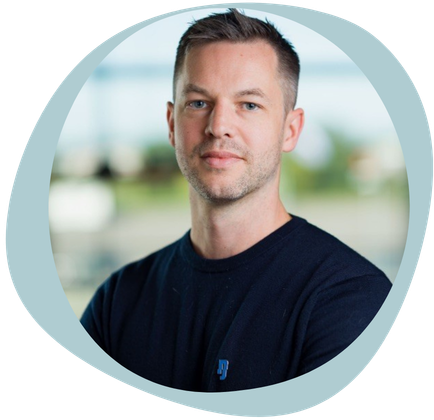
About Dr. Ross Paterson
Dr. Ross Paterson is a Principal Research Fellow at UCL Queen Square Institute of Neurology and a consultant neurologist at the National Hospital for Neurology and Neurosurgery in London and Darent Valley Hospital in Kent, where he splits his time between research and seeing patients in clinic. His work centres on younger-onset Alzheimer's disease, and the proteins that drive them, with a particular focus on measuring how those proteins are made and cleared in the human brain.
Dr. Paterson is currently leading the NIO-SILK study at UCLH, an early-phase trial targeting tau that recruited its first participant anywhere in the world at Queen Square. He also works at Washington University as a member of the DIAN-TU, so the pipeline he'll describe runs straight through territory our families already know. His research is supported by an Alzheimer's Association Clinician Scientist Fellowship and a Part the Cloud grant, along with the UK Dementia Research Institute, Queen Square Biomedical Research Centre, Rosetrees Trust, Race Against Dementia, the Q Charitable Trust and the Wellcome Trust. He's originally from Renfrewshire in Scotland, with family roots in Skye, and trained in Glasgow, London, Brussels, and San Francisco.
Who should attend this event?
This conversation is open to family members in the familial Alzheimer’s disease community. The event will be recorded for those who aren’t able to make it.