
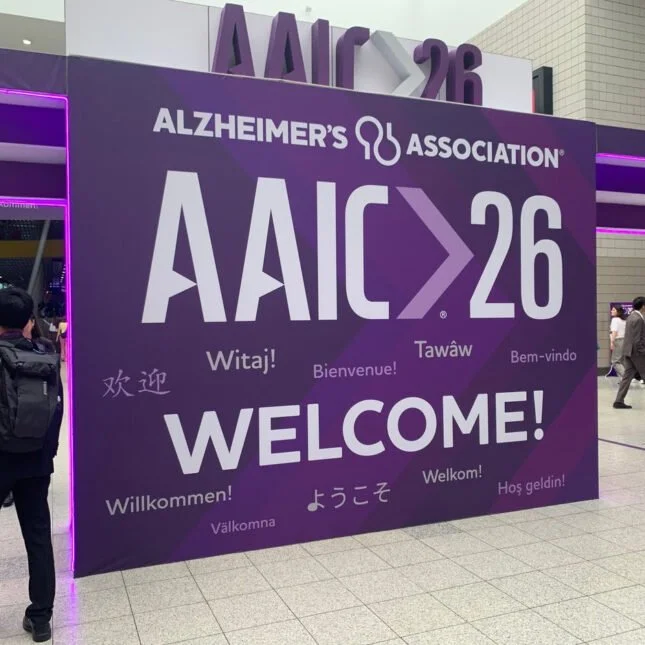
Every July, thousands of Alzheimer's researchers gather in one place to share what they have learned. The weeks following the conference typically include a surge of disparate press releases and social media posts about the latest updates.
This workshop closes that gap. Dr. Lindsay Hohsfield, founder of Youngtimers and an Alzheimer's researcher, attended the 2026 Alzheimer's Association International Conference in London, along with the DIAD family conference held the day before. She sorted through the presentations and press releases to pull out the findings that matter most to families affected by familial Alzheimer's disease (FAD).
Here is what she covers:
The first results from drugs that target tau, including one trial run entirely in people with FAD mutations
How blood tests are catching up to the spinal tap for diagnosis and tracking
What Leqembi looks like in everyday clinics, outside of a clinical trial
What lowers the risk of ARIA, the brain swelling and bleeding that can come with anti-amyloid drugs
Where prevention research is heading
About Dr. Lindsay Hohsfield
Lindsay is executive director and co-founder of Youngtimers, and a research group leader at the Medical University of Innsbruck ⧉, where she holds an APART-USA Fellowship from the Austrian Academy of Sciences. She has spent close to 20 years in Alzheimer's research.
She earned her PhD in neuroscience at the Medical University of Innsbruck and then spent more than a decade at the University of California, Irvine, studying microglia, the immune cells of the brain, and their role in Alzheimer's disease. That is the lab work she refers to below when she discusses the Christchurch mutation. She is a former Fulbright Scholar, an NIH post-baccalaureate research fellow, and an Alzheimer's Association Research Fellow.
This presentation reflects Dr. Hohsfield's summary of research shared at AAIC 2026, presented to our community on August 26, 2026. Bringing the science back to the families it concerns helps us navigate the unique challenges we face as members of this community.
This transcript has been edited for clarity and readability. For the full presentation, watch the video.
The 2026 DIAD family conference in London
LINDSAY: The DIAD family conference happened on Saturday, July 11th at University College London. The theme was Rising Together. The lecture hall was completely full. There were families from across Europe and from outside Europe, in the same room as researchers who study the disease. The day was built to move from the earliest lab science all the way through treatment.
The day in three parts: the Eisai keynote, Ross Paterson on how a drug moves from lab to clinic, and the advocacy panel.
I was really impressed and touched that the CEO of Eisai, the lead manufacturer for lecanemab and E2814, gave the keynote address. He walked us through how the company used mutations and data from family members to identify the biological reason that plaques form, and then used that to develop drugs to target it. He told us that YOU were the key to finding that underlying mechanism of Alzheimer's disease. He also mentioned how we are essential partners in developing treatments and accelerating medicine in Alzheimer's disease, which I think is a really important message to share with all of you.
Next, we had a scientific presentation from Dr. Ross Paterson at UCL. He talked about how you go from finding out that a particular molecule changes in disease and is potentially druggable, all the way to it reaching the clinic and being delivered to a person as a drug. That path runs through clinical trials, phase one, two, and three. Ross will be joining us in September for a Youngtimers workshop on those topics.
Finally, I want to share the advocacy panel that I facilitated with panelists Jetske, Davide, and May. These were three individuals who shared stories about their advocacy.
Davide runs marathons and is an Ironman, and spoke about what that means for the disease, intersecting mental health, awareness, what that all looks like.
Jetske shared what it's like to talk about her status and her story on national television with journalists, how that evolves over the years, and how it led to some of her research work.
May shared how she didn't consider herself an advocate until being asked to join the panel, and spoke to the importance of being an advocate for a loved one who's experiencing the disease. In her case, advocating for her father's legacy, and the essence of who he is as a person, which we all found very moving.
What AAIC is, and how big it gets
LINDSAY: It's the world's largest gathering of researchers working in Alzheimer's disease and other dementias. It's a four-day program, hosted from Sunday to Wednesday, July twelfth to the fifteenth. Over 7,800 people either presented posters or gave oral presentations.
[Editor's note: The conference received more than 7,800 scientific submissions.] For me to convey to you all the research presented at AAIC would be a very difficult task, and very hard to do in an hour. I've highlighted the top findings that I find really relevant and important to our community.
The scale of the conference, and the five areas this workshop covers.
The other thing I want to share is the magnitude of this conference. Alzheimer's Association reported that there were over 11,000 people in attendance. Think about that: being in a room with 11,000 people who are day-to-day studying Alzheimer's disease, working towards a cure. It is very powerful and impactful to know there are that many individuals invested in understanding this disease and developing a cure.
In recent years, AAIC has opened up a new program called "AAIC for All." If you are a person with lived experience or have Alzheimer's disease, they give you access to all of the talks that day.
[Editor's note: The community program is called AAIC For All: Community. It is free, but registration is required.]
AAIC For All: Community ⧉ - The Alzheimer's Association page for the free community program, with registration details
Research advances from AAIC 2026 ⧉ - A plain-language roundup of the conference from the Alzheimer's Association, and a good starting point for any topic below
Tau finally got its turn
LINDSAY: I think all of you are aware that the Alzheimer's disease brain is filled with amyloid plaques and tau neurofibrillary tangles. For many decades, we've been very focused on amyloid and not so much on tau. We now have three drugs that target amyloid.
We have lecanemab, which targets the soluble form of Abeta, before it aggregates into plaques, and we have donanemab, which targets a specific modified form of amyloid called pyroglutamate Abeta. This form of Abeta is very sticky and it aggregates. It's more clumped than the soluble form. So we have drugs targeting different forms of amyloid.
What's really exciting is that this year there was finally an announcement about a drug that targets tau, and that is E2814.
[Editor's note: E2814 now has a generic name, etalanetug. Eisai reported the eMTBR-tau243 reductions from Study 103 at the CTAD conference in December 2025.]
Where each drug acts. Lecanemab targets soluble amyloid beta, donanemab targets the pyroglutamate form, and etalanetug targets the microtubule binding region of tau.
How does this drug target tau? It's an antibody, so similar to lecanemab and donanemab, it targets the protein form of tau. It binds to the microtubule binding region, which researchers have identified as the region that causes tau to seed and propagate and spread in the brain. The thinking is that by blocking this region, you stop tau from continuing to spread.
What they show in this study is really interesting, because the study was done in our population. People with mutations in presenilin 1, presenilin 2, and APP were studied in this phase 1b trial. They found a form of tau called eMTBR-tau243 that is largely absent in healthy participants. It was only detected in DIAD individuals, people with these mutations, indicating that this particular form of tau is really relevant to the disease and to its tau pathology. It also shows a strong correlation to tau PET.
People were treated with this antibody for nine months, and they show an 89% drop in this tau biomarker in spinal fluid. That's really amazing, because it means the drug is reducing tau, which is what we want it to do. They also showed a 90% drop in the same marker in blood, and reductions in multiple forms of CSF p-tau. For those of you who are scientists, p-tau205 and t-tau biomarkers were all reduced as a result of treatment.
This study is called “Study 103” and it's a phase 1b/2 trial. There were eight DIAD individuals with mild or moderate cognitive impairments. This was done in symptomatic stages rather than preclinical ones, and it shows that we can reduce tau in these individuals, which is exciting.
Learn more about how trials work and how to take part in one in our Guide to Participating in Familial Alzheimer's Research.
Eisai presents new data on anti-tau antibody etalanetug ⧉ - The company announcement with the full biomarker numbers
Study 103 record on ClinicalTrials.gov ⧉ - Design, eligibility, and status of the trial described here
Where the new tau biomarker fits in the disease timeline
LINDSAY: I'm going to be throwing out a lot of biomarkers, so I thought we could all land at the same spot on what Dr. Bateman and Dr. McDade present often at these conferences—a biomarker trajectory of the disease.
It runs from pre-pathology or pre-symptomatic stages into plaque stages, tau stages, and then the symptomatic stage. You can see all of these different biomarkers coming up at different stages, which lets researchers see exactly where somebody falls and how the disease progresses over time.
The biomarker trajectory Dr. Bateman and Dr. McDade present at these conferences. Each curve rises at a different point in the decades before symptoms begin. Bands along the bottom mark the windows for primary prevention, secondary prevention, and symptomatic treatment.
In the beginning, we see CSF and plasma changes in Abeta 42 and 40. Then changes in p-tau217. Then changes in other p-tau forms like 181 and 205. Then changes in NfL and total tau. During the p-tau 205 phase, you get significant plaque deposition in the brain. Around the time of the NfL and total tau changes, we get tangles in the brain. This new biomarker they've discovered, the MTBR biomarker, falls right in the range of when tangles form. It correlates very closely with tangles, which is really great to have.
Having more biomarkers that span the entire trajectory of the disease lets researchers see, at any point in time, where anybody is in the disease, and then target specific therapies to those specific pathologies.
Unpacking the diranersen results
LINDSAY: There's been a lot of excitement about this next tau drug, which is called diranersen. This one is from Biogen. In the media, it's been presented as the first tau drug to slow memory and thinking loss. Let's try to unpack some of these phase two results.
The full phase 2 picture, including the side effects that did not make the headlines. A confusional state affected 5 percent on placebo, 13 percent on the low dose, and 25 to 28 percent on the higher doses.
What is diranersen? Diranersen is a tau antisense oligonucleotide (ASO). What does that mean exactly? You all are probably very familiar with lecanemab and donanemab. These are antibodies. They target proteins. What an ASO does is target the messenger that carries the instructions for making the protein.
In biology, you have your DNA and your genes, and those are like blueprints for making a protein. Then you have your messenger, which is like a copy, that you need in order to make the protein. A tau ASO gets rid of that messenger, so there's no copy left to make tau from. To be very specific about it, it binds and degrades the messenger RNA of the MAPT gene, which results in reduced protein expression of tau.
Antibodies are normally delivered through IV, or now subcutaneously, because they can penetrate the brain and bind to proteins of interest. Unfortunately, ASOs cannot do that, which is why people have to undergo injection into the CSF via lumbar puncture. It's also called an intrathecal injection.
The participants in this study underwent seven lumbar punctures over 76 weeks. There were 406 people in the study, in the early stages of Alzheimer's disease, and there were no DIAD people in this study. People received three different dosing regimens.
What I want to mention is that this did not meet its primary endpoint. Normally a study has a goal that a drug slows decline at a certain statistical percent or number, and if it doesn't meet that, it doesn't meet its primary endpoint. There is some nuance here, because at some of the doses, particularly the low dose, they did see a slowing of cognitive decline on some of these cognitive measures or outcomes. They also reported significant reduction in PET tau and CSF total tau. One of the most prominent researchers in Alzheimer's disease called these findings "a pivotal moment in the field."
[Editor's note: The researcher was Gil Rabinovici. The AAIC 2026 findings were presented by Catherine Mummery.]
Looking at what this drug did after 72 weeks: it resulted in a 52 to 65% drop in total tau in the spinal fluid and a 9 to 26% slowing in decline compared to placebo. 9% is not much, and it's not statistically significant, but as you get closer to 26%, it gets interesting. Biogen was really excited by these results, as was a lot of the rest of the field, and they are progressing this to a phase three trial.
[Editor's note: The phase 2 study is called CELIA. Diranersen is also known as BIIB080, and it is investigational. It has not been approved by the FDA and is not available outside of clinical trials.]
From my perspective as a scientist, it has taken us a long time to finally look at tau, so to have a drug that reduces tau and potentially slows cognitive decline is really exciting.
But there are some nuances we should be aware of.
Getting seven lumbar punctures is a lot, and there are adverse effects like post lumbar puncture syndrome. We're in a position as a community to keep talking about what that is like.
What's the risk we're willing to take as a community?
What kind of clinical benefit do we want?
If we're going to enter this era of ASOs, what does that mean?
What kind of risk are we willing to take, and what kind of side effects are we willing to experience?
Some people reported a confusional state, so there's still data that needs to be analyzed there. They also didn't report p-tau results. I'll be very curious to hear when those results read out, too.
Alzheimer's Association statement on the CELIA results ⧉ - A short, plain-language explanation of what a missed primary endpoint does and does not mean
Biogen's AAIC 2026 data announcement ⧉ - The company's own summary of the clinical and biomarker findings
Topline CELIA results ⧉ - A more skeptical read of the same data, written for clinicians
The spinal tap is losing its monopoly
LINDSAY: This is about how blood-based biomarkers are really gaining traction as far as diagnosing and monitoring Alzheimer's disease.
This was a Swedish study, where family doctors and specialists like neurologists diagnosed people before the use of the PrecivityAD2 test, a new commercial test for diagnosing Alzheimer's disease developed by C2N and Dr. Bateman. The question was how much the test improves diagnosis.
65 out of 100 patients were correctly diagnosed by a family doctor before the test, and that improved to 93 out of 100 after the test. What the test does is pair p-tau217, another one of these p-tau biomarkers, with the Abeta 42 and 40 ratio. It gives the doctors a readout that says a patient is either negative, likely positive, or positive.
This helped specialists like neurologists as well as family doctors. They went from diagnosing 76 out of 100 to 94. It changed diagnosis, and it also helped create better care plans.
Family doctors went from 65 correct diagnoses out of 100 to 93. Specialists went from 76 to 94. These were people already facing memory loss, not people who feel fine.
A number of commercial tests will be on the market soon and are in research development right now. I think we'll be seeing a lot more heading into the next year or two.
Blood test improves accuracy of Alzheimer's diagnosis ⧉ - The AAIC press release on the Swedish study, including how the comparison was set up
The role of biomarkers in primary care and early diagnostics ⧉ - Coverage that puts the diagnosis numbers in context
Can a blood test see Alzheimer's disease coming?
LINDSAY: There's been a lot of discussion in our community about this. If p-tau217 is such a great biomarker for Alzheimer's disease, can I get tested to see whether I'm starting to develop symptoms?
There wasn't a panel just for our community, but there was a panel and some data presented about general Alzheimer's disease. Multiple studies have been done and they all report different findings.
In a Minnesota study of over one thousand six hundred adults, researchers reported a 38% chance of mild cognitive impairment within 10 years for people with high p-tau217, against 18% for those with low p-tau217. In the United Kingdom, where they looked at four hundred and eighty-nine adults age seventy, thirteen percent versus one percent developed dementia over the next eight years, comparing high p-tau217 to low. In six US cohorts, which involved two thousand six hundred adults, seventy-eight percent in the very high group had a risk of cognitive impairment within 10 years, and 38% within five years.
Three teams, three populations, three methods, landing in broadly the same place. The Minnesota figures are the chance of mild cognitive impairment within 10 years, the United Kingdom figures are dementia over the next eight years, and the six US cohorts report the risk of cognitive impairment within 10 years.
Where is there agreement here? In general, if you are an older person, usually age 70 or above, with high p-tau217, you have a roughly 50% chance of a dementia diagnosis within 10 years. Those with lower levels face much lower odds.
Should someone with no symptoms be tested? This was a really big topic of discussion at the conference. Routinely, not yet, but it is a top agenda item. This is very different for our community, and all of these discussions were had in the context of late onset or sporadic Alzheimer's disease. I think it's good to know where the field stands.
Right now the Alzheimer's Association guidance is that these blood tests, the p-tau217, should only be ordered by a doctor for people who are having memory or thinking problems. For anyone else, they remain research and risk stratification tools. A high number is not a verdict. Up to half of people with high p-tau217 never developed dementia within 10 years. It says your risk is higher on average, but it doesn't necessarily mean you'll get it.
I was talking to a clinician the other day who is studying p-tau217 in a number of individuals. She said that even within a single person, the levels can rise and fall, and they're still trying to figure out why. I think it'll help first in ruling people out. Jonathan Schott gave guidance that screening people over the age of 70 would be more about ruling out risk than confirming it. Reisa Sperling, who is leading one of the biggest early onset studies in Alzheimer's disease, focused on this: we are really excited about these biomarker findings and we really want to enter a period of preclinical research, but we need more data on these and how they change over time.
Where the field stands today, and the reason it was top of the agenda in London.
Learn more about genetic testing decisions in our Guides to Genetic Testing.
Research advances from AAIC 2026 ⧉ - The Alzheimer's Association summary of the prediction study, written for a general audience
The prognostic value of p-tau217 levels on progression to clinical impairment over 2, 5, and 10 years ⧉ - JAMA, 2026. The full study, published the same week it was presented
How Leqembi is holding up in everyday practice
LINDSAY: These are real world numbers. I think we're all very familiar with how lecanemab has performed in clinical trials, but what does that look like outside of a trial, in everyday clinics?
This was a US study of 432 people receiving lecanemab in a clinic setting, followed over 17 months. 76% were holding steady at the same disease stage after about 17 months. 7% were rated as improved. 87% were still on the drug at the time of the report. 6% had ARIA-E, or brain swelling.
Real world means people treated in ordinary clinics rather than in a trial. Of the 6% with ARIA-E, 1% had any symptoms.
[Editor's note: This is the LEADER real-world study, presented at AAIC 2026.]
What's really exciting is that on July 13th, the FDA approved a subcutaneous starting dose of lecanemab. A subcutaneous injection in place of an IV infusion is a big change for people starting treatment. Really excited about that.
[Editor's note: The approved product is Leqembi Iqlik, given by autoinjector once weekly. Eisai expected it to become available in the United States in late August 2026.]
FDA approves Leqembi Iqlik as an initiation dose ⧉ - The Eisai announcement, including the dosing schedule and the LEADER real-world findings
Leqembi ⧉ - Alzforum's running record of every lecanemab trial, approval, and real-world report in one place
Making anti-amyloid treatment safer
LINDSAY: There was reporting on ARIA in clinics showing that more sensitive scanners pick up more ARIA than less sensitive ones. There's a lot of guidance and parameters and regulation that still need to be worked out. But the risk of ARIA is getting smaller. It can be measured, it can be managed, and it can be slowed down even before treatment starts.
Three separate reports pointed the same direction, and some of what drives ARIA is ours to manage. In people with two copies of APOE4, the slower donanemab ramp brought ARIA-E down from 57 percent to 24 percent.
The data presented showed that blood pressure, over genotype, is a strong predictor of ARIA. In 468 people on lecanemab, diastolic blood pressure above 75 tripled the risk of ARIA-E. High salt intake raised it as well. Both are things to work on before you start the drug.
Going up in dose more slowly, ramping up donanemab over four months instead of three, cut ARIA by a third. That held even in people with two copies of APOE4.
Then there's the scanner itself. A 1.5T scanner found six microbleeds where a 3T scanner found 30. It depends on what MRI is available to you, and that will shape treatment eligibility decisions. What was also said out loud in London is that you cannot make the risk of ARIA zero, but people are trying to measure it, manage it, and slow it down.
[Editor's note: The line belongs to Atsushi Iwata. Careful patients and careful clinics make the risk smaller rather than absent.]
De-risking donanemab: dosing tweak cuts ARIA ⧉ - Alzforum's report from the AAIC session on the slower titration data
Notes from AAIC 2026: a field in transition ⧉ - A short overview of the conference from the UK Dementia Research Institute
Trontinemab and the blood brain barrier
LINDSAY: What I'm really excited about is trontinemab. The clinical trial results were read out at a previous meeting, and these are results from the open label extension, when everybody was put on drug. 126 people were carried on to the treatment extension. There were only two cases of ARIA-E in the whole cohort.
Read these numbers with their caveats: 126 people, an interim look, everyone knew they were taking the drug, and no comparison group. This is the common form of Alzheimer's disease rather than ours.
I should probably explain what trontinemab is. What's very unique about it is that it's an anti-amyloid antibody coupled to a receptor or transporter that helps it ride across the blood brain barrier. Normally our blood-brain barrier keeps pathogens, bacteria, viruses, and big molecules from entering our brain. This is protective of us. It also makes it really hard for researchers to get drugs into the brain. This is a much better and more targeted approach to getting anti-amyloids in. It means you can use a lower dose, which means less severe side effects and less severe ARIA. That's what we're seeing here.
This is really exciting from Roche. These are people who had already cleared plaques in the clinical trial, and they showed even further plaque clearance of 12 centiloids. There was a 51% drop in p-tau217 as well. All of this means they're ready to move on to phase three. Two phase three trials are already running in early Alzheimer's, along with PrevenTRON, a prevention trial with people who have no symptoms. Really excited about this drug and where it goes next.
[Editor's note: The two phase 3 trials in early symptomatic Alzheimer's disease are TRONTIER 1 and TRONTIER 2. PrevenTRON was announced at AAIC 2026 as a planned phase 3 prevention study rather than one already enrolling. Roche said at the time that it expected to start it within a few months.]
Roche unveils PrevenTRON ⧉ - How the prevention trial is designed and who it aims to enroll
Trontinemab ⧉ - Alzforum's full history of the drug, including how the blood brain barrier shuttle works
Prevention keeps moving earlier
LINDSAY: We're all aware of what the DIAN-TU Primary Prevention trial is. It's open to people in our community who have presenilin one or two mutations or APP mutations, or who have parents who had these mutations, and who are 11 to 25 years younger than the age their family member developed symptoms. Initially, you don't have to know your genetic status to join. The drug is a shot, a subcutaneous injection every three months.
[Editor's note: The study drug in the DIAN-TU Primary Prevention Trial is remternetug. Participants can enter Stage 1 without knowing their genetic status, but must learn it to continue into Stage 2. The GLP-1 trial is called PROTECT-Cog.]
The Alzheimer's Association launched a hundred million dollar global trial testing whether adding GLP-1 medication to the structured US POINTER lifestyle program lowers dementia risk. US POINTER looks at whether exercise, diet, social engagement, and cognitive reserve building delays or prevents dementia. The field is a little bit divided on it, but in general I think we all agree that a good lifestyle promotes good brain health. Looking at GLP will be really interesting, to see how it integrates into that story.
There was also a presentation of the Latin American FINGERS trial, with a thousand older individuals across 11 Latin American countries. It showed that structured coaching and peer support, around social interaction, exercise, and diet, improved thinking and memory abilities 55% more than a self-guided group did. I think that's really interesting, and it grounds our need for peer support and guidance in pursuit of living a better lifestyle and reducing the risk of dementia.
Three routes into prevention research, one of them open to our community right now.
Learn more about the trials open to our community in our Guide to Participating in Familial Alzheimer's Research.
DIAN-TU clinical trials ⧉ - Which trials are open, who qualifies, and how to reach the study team
Alzheimer's Association launches PROTECT-Cog ⧉ - The announcement of the lifestyle plus GLP-1 prevention trial
Lifestyle program improves brain health in Latin America ⧉ - The LatAm-FINGERS results, with the coaching comparison explained
What can be done now
LINDSAY: An easy one is to start with blood pressure. Dr. Nate Chin called it the single best way to monitor your brain health. In London, it turned out to be the strongest predictor of ARIA in people on treatment. It's cheap, available now, and it protects thinking. Check your blood pressure about three times a week and aim for around 120 over 80.
Blood pressure counts twice now: for brain health generally, and as the strongest predictor of ARIA for anyone on treatment.
Structured support beats good intentions. The lifestyle results, covering physical activity, eating healthy, cognitive training, and social engagement, keep showing that coaching and group support are what produce the benefit, rather than a list of tips. That's why I think what we're doing here helps us support one another and helps our brains at the same time.
Every result today traces back to families who joined a trial, traveled for numerous site visits, and sat for long hours getting evaluated and scanned. You are the reason we know so much about the disease, and the reason we have treatments.
“You are the reason we know so much about the disease, and the reason we have treatments.”
Questions from the community
COMMUNITY QUESTION: For the tau drug that showed a 90% reduction in blood and CSF biomarkers, did the study authors indicate how much the tau reduction slowed memory decline?
LINDSAY: I think that's in reference to the E2814 study, which was done in people who already had mild or moderate cognitive impairment. If you look on clinicaltrials.gov, there are only eight individuals in the trial, so it's very small. I don't know whether they'll be able to look at this. It hasn't been reported yet. I'm very curious whether we see any slowing, but at the moment, no.
There's also a second study, the DIAN-TU Tau NexGen trial, which combines lecanemab and E2814. No study results have been released from that, so we can't speak to it.
For the tau ASO, diranersen, I think they did six to seven different cognitive measures, and in a number of them there was a trend showing that reducing tau does slow decline. That's the first evidence that targeting tau, the pathology that correlates most closely with cognitive decline, helps in that respect.
COMMUNITY QUESTION: Some research is looking at other sources of Alzheimer's symptoms besides amyloid plaques and tau tangles, for example inflammation or gut biology. Is this something the FAD community could or should be tracking, or is it theories with no scientific backing?
LINDSAY: I have to present my conflict of interest. I am an inflammation biologist. I study immune cells, so I have a very biased opinion on this. My view is that inflammation plays a tremendous role in the disease, and we should definitely be looking into it. We are.
The way I look at it is that these mutations cause the buildup of amyloid. We don't yet understand what then triggers tau, because we have people with amyloid building up for years and years with no symptoms at all until tau shows up. A big question in the field has always been: what is the trigger? What is the thing that all of this amyloid sets off to cause tau?
What I personally believe is that immune cells, and in particular microglia, are at the center of this. Some of the data that backs that up involves the Christchurch mutations you may have heard about. There was a woman in Colombia who had this mutation. She had a presenilin 1 mutation, and all of her other family members got sick around 40 years of age, but she lived into her 70s, and researchers found that she carried this unique genetic change. In my lab, we introduced this protective mutation into mice. You could see that the microglia had a completely different response to amyloid and to tau. It was eliciting a less inflammatory response to amyloid.
[Editor's note: The woman was Aliria Rosa Piedrahita de Villegas, a member of the large Colombian family that carries the PSEN1 E280A mutation. The Christchurch change is a separate mutation, in the APOE gene rather than in PSEN1*, and she carried two copies of it. She did not develop mild cognitive impairment until her seventies, roughly three decades later than expected for her family, despite very high amyloid plaque levels in her brain. She died in 2020 at age 77 of melanoma.]
This is all very preliminary data, but I do think inflammation is a target. There are a lot of people in the field who agree with me that inflammation is an important component.
If I look into the future of Alzheimer's disease research, I see it as similar to how AIDS and HIV developed, where you identify all of these different targets of the disease. This person has more amyloid, so let's focus on an amyloid therapy. This person has tau, so let's focus on a tau therapy. This person has a lot of inflammation, so let's combine amyloid and inflammation. I can see more development of precision medicine, or a cocktail that better matches people wherever they are in their disease trajectory.
Colombian woman's genes offer new clues to staving off Alzheimer's ⧉ - News coverage from Science explaining the discovery and why it mattered, written for a general reader
APOE R154S (Christchurch) ⧉ - Alzforum's running summary of everything learned about the mutation since 2019
Resistance to autosomal dominant Alzheimer's disease in an APOE3 Christchurch homozygote: a case report ⧉ - Nature Medicine, 2019. The original case report
COMMUNITY QUESTION: When we hear about innovations like injectable Leqembi or blood tests instead of lumbar punctures, what does that mean for people who are currently in clinical trials?
LINDSAY: That's a great question. Clinical trials are immensely complicated in their design and statistical analysis. If you change one variable, that could be the reason you're not detecting a difference between your placebo group and your treated group. Unfortunately, even though these antibodies may soon be available through subcutaneous injection, if you're in a clinical trial that uses IV injection, you won't be able to switch until the trial ends, because that's how the trial was built.
It's the same for the lumbar puncture, unfortunately. If the clinical trial said we need to collect this amount of CSF and do this many lumbar punctures, the CSF metrics were built into the design and into the statistics. Taking them out would be a potential factor that might affect the ability to detect a difference between placebo and drug. I don't think we'll be able to transition from lumbar puncture to blood tests mid-trial, even though that would be amazing.
What I do think it means is that future clinical trials will include fewer lumbar punctures, or maybe none. There's still more data needed. It's the same with injection, and we're seeing that now with the primary prevention trial, where we have a subcutaneous injection of anti-amyloid rather than IV.
COMMUNITY QUESTION: Does your inflammation theory suggest further GLP-1 trials? And can you share more on the GLP-1 funding, and whether that's looking into prevention?
LINDSAY: Full disclosure, I don't know very much about GLP-1 and its mechanism of target, so I can't speak to that. I do know it has an impact on somebody's lifestyle and health and heart health, and I know that taking care of your heart is taking care of your brain. More than that I can't really speak to, unfortunately.
COMMUNITY QUESTION: Do we know how much longer DIAN-TU will be open for enrollment?
LINDSAY: The way enrollment works is that they have a set number of people they need to enroll in order to set their statistics and detect a difference between people on placebo and people on drug. They have that set number, whether it's two hundred or three hundred people, I'm not sure. It runs until they reach that number. If two hundred people showed up and said they want to enroll, then enrollment is closed. If one person shows up every month for the next two years, it's a slower enrollment. Unfortunately it's not something we can predict.
ECOMMUNITY QUESTION: DIAN-TU ART is two years in. Were there any discussions of that at the family conference?
LINDSAY: They didn't present any data. But I will say that I met a number of individuals who are in ART and they are all past symptom onset. That's anecdotal evidence that the drug does seem to be working. If you treat people early enough in the pre-symptomatic stages, it does look like lecanemab can prevent or slow symptom onset.
They shared a lot of dates in their presentations, in lieu of reporting, about when we should expect information. I do feel like the next two years of conferences will be full of reports.
It was also shared that somebody personally knows ten out of forty people in the trial and they are all still asymptomatic past symptom onset. That's really amazing.
COMMUNITY QUESTION: You mentioned post-LP syndrome earlier. Is there any concern about brain harm or accelerated decline from it?
LINDSAY: I'm not a clinician, I'm not an MD, but from my understanding, imagine your CSF as the fluid surrounding your brain. If you're a smaller individual versus a larger individual, you have less fluid. If a lot of that fluid is taken, there's a period of time that your body needs to reproduce it. There's a discomfort, I would say, in what your brain is experiencing during that time. That's what post lumbar puncture syndrome is, at least as it's been explained to me. Again, I'm not a clinician.
It's not harmful to the brain, but it can be an uncomfortable process, especially if you're a smaller individual, because the amount of fluid taken relative to what you have in your body is higher than for people who are larger.
COMMUNITY QUESTION: Do we have any details about ARIA rates in the younger people participating in research, as opposed to the data we have on older people?
LINDSAY: I don't have this on hand, but what I can say is that for younger people who don't have a lot of amyloid pathology, rates of ARIA are much lower than for people who are symptomatic or who have higher amyloid plaque in their brain.
Regarding APOE4/4, I don't know how that tracks. But I know that if you're an APP duplication carrier, one of these APP carriers that results in cerebral amyloid angiopathy, there's real concern about high ARIA if you were to take an anti-amyloid.
COMMUNITY QUESTION: With all the focus on tau in the latest findings, are drugs that target amyloid still as useful? Is the focus shifting to tau?
LINDSAY: I would say no. Everybody is still very excited about anti-amyloids and what they will do for Alzheimer's disease. We know Alzheimer's disease starts with amyloid plaques. It's just that tau correlates very closely with symptom onset. You want to be able to prevent the disease, and you also want to be able to treat people who already have symptoms. We need more drugs in the mix in order to tailor the right therapeutic approach to each individual, based on where they are in their disease stage.
COMMUNITY QUESTION: Is there any evidence for the preventative trials of Leqembi versus Kisunla in terms of effectiveness, since they work on different types of amyloid?
LINDSAY: I don't have it off the top of my head, but I do think donanemab is slightly more effective at clearing plaques, because it targets the more aggregated form of Abeta. Lecanemab is still really effective, and anybody who's on it is in a good spot.
What they're excited about with donanemab is that it carries a lower ARIA risk. I think that's what the field is moving towards, anti-amyloid therapies with less ARIA risk. That's the focus now, more than effectiveness. I think they're all really effective at removing amyloid at this point.
COMMUNITY QUESTION: Where will next year's conference be?
LINDSAY: AAIC 2027 will be in Chicago from July eighteenth to twenty-second. Typically the family conference is the weekend before, although that hasn't been announced per se.
[Editor's note: The Alzheimer's Association lists the main AAIC 2027 program as July 18 to 21 in Chicago and online, with AAIC For All: Community on July 22. Registration for the community program is expected to open in spring 2027.]
Resources mentioned in this workshop
AAIC For All: Community ⧉ - A free Alzheimer's Association program that opens conference findings to people with lived experience, families, and the public
ClinicalTrials.gov ⧉ - The federal database where trial details, enrollment criteria, and results are posted
DIAN-TU clinical trials ⧉ - The Dominantly Inherited Alzheimer Network Trials Unit, which runs the Primary Prevention, Tau NexGen, and ART studies open to our community
Research advances from AAIC 2026 ⧉ - The Alzheimer's Association summary of everything announced at the conference, written for a general audience
Participating in research is how nearly everything we know about familial Alzheimer's disease (FAD) was learned, and how new treatments reach the families who need them. Check out our Guide to Participating in Familial Alzheimer's Research