
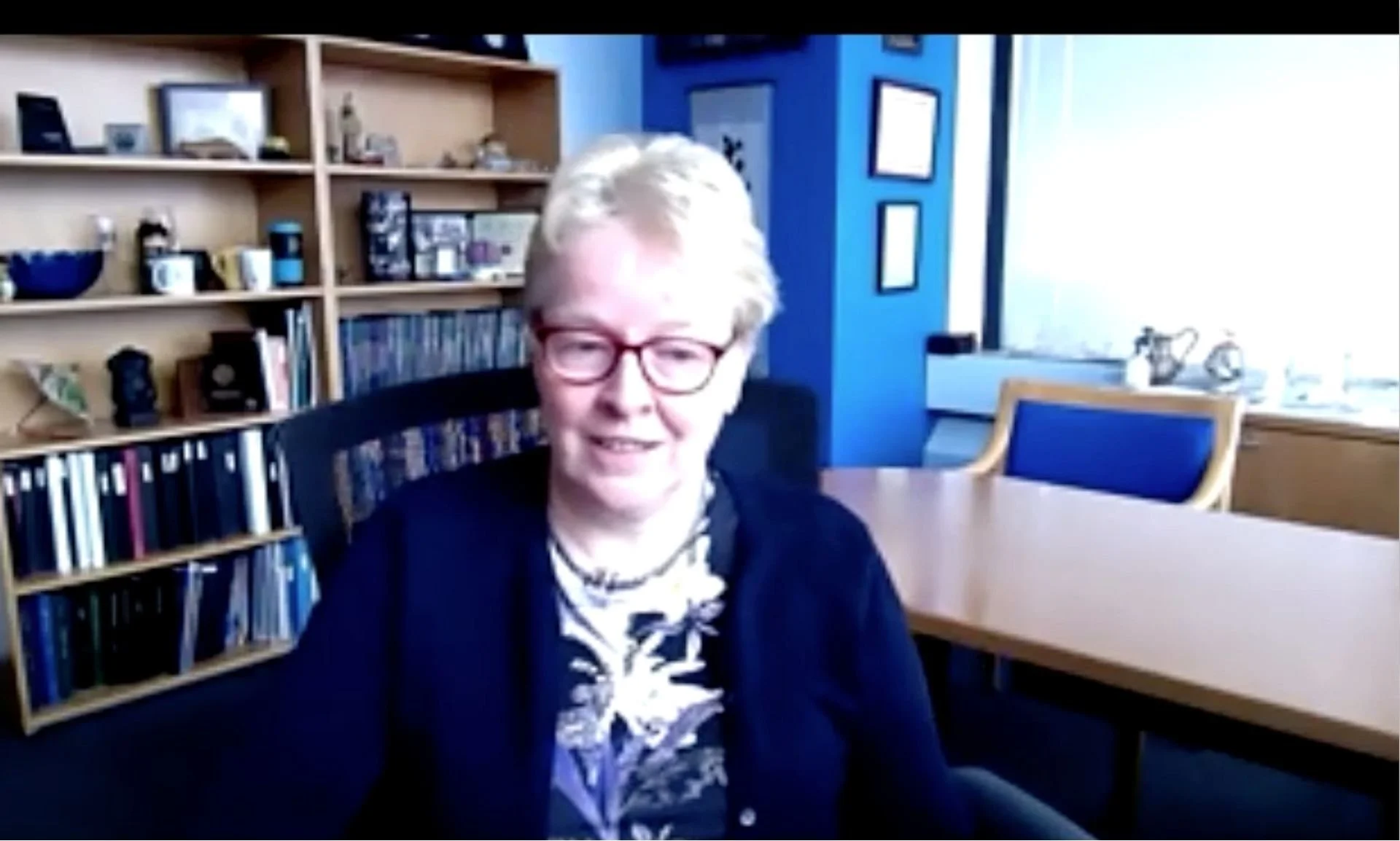
Familial Alzheimer’s disease (FAD) is caused by a mutation in one of three genes: PSEN1, PSEN2, and APP. Families living with an FAD mutation often carry questions that go well past what a single appointment can cover. What does one small change in a gene actually do? Why do relatives who carry the same mutation develop symptoms at different ages? Could gene editing ever remove a mutation from a family line altogether?
Dr. Alison Goate has spent more than three decades on those questions. In 1991, she was part of the team that reported the first mutation shown to cause familial Alzheimer’s disease. In this Ask the Expert conversation, she walks through the biology of these genes in plain terms, and explains why families with FAD mutations have been central to nearly everything the field now knows.
In this conversation, Lindsay, co-founder of Youngtimers, asks Dr. Goate about:
The difference between a gene, a mutation, and a variant
How a single change in PSEN1, PSEN2, or APP leads to Alzheimer’s disease
Why age of symptom onset varies, even within one family
Whether a mutation can be switched on or off later in life
What gene editing, antisense oligonucleotides, and embryo screening could offer families
How families with FAD mutations reshaped Alzheimer’s research
Youngtimers respects every family planning path, including having biological children without testing, IVF with preimplantation genetic testing, donor conception, adoption, and choosing not to have children. The reproductive options discussed here are presented as information, not as a recommendation.
About the expert, Dr. Allison Goate
Dr. Alison Goate ⧉, DPhil, is Chair of the Department of Genetics and Genomic Sciences at the Icahn School of Medicine at Mount Sinai ⧉, where she is also the Willard T. C. Johnson Research Professor of Neurogenetics and Professor of Genetics and Genomic Sciences, Neuroscience, and Neurology. She is the founding director of the Ronald M. Loeb Center for Alzheimer’s Disease at Mount Sinai.
As a postdoctoral fellow at Imperial College London working with John Hardy, Dr. Goate reported the first mutation shown to cause familial Alzheimer’s disease. Her later work at Washington University in St. Louis identified the mutation carried by the large Colombian family now enrolled in the Alzheimer’s Prevention Initiative. Her research on Alzheimer’s disease and related dementias has supported the development of animal and cellular models, and of anti-amyloid and anti-tau therapies. She is a member of the National Academy of Medicine and a fellow of the American Association for the Advancement of Science.
This conversation reflects Goate’s unique perspectives and experiences as shared with us on December 21, 2021. Insights from experts like Goate help us navigate the unique challenges we face as members of this community.
This transcript has been edited for clarity and readability. For the full interview, watch the video.
LINDSAY: Families often say “I have the Alzheimer’s gene,” or “I have the Alzheimer’s mutation.” What is the difference between a gene, a mutation, and a variant?
GOATE: A gene is a string of nucleotides, or bases, made up of DNA that encodes a protein. We have about 20,000 genes in our genome. If you have a single change in one nucleotide in that gene, that would cause a DNA variant. That variant may have no impact on the protein sequence, or it could change an amino acid within that protein sequence, or maybe it will completely truncate the protein.
Mutation, strictly speaking, should be used to describe the event when that variant is created in the DNA. But people often use it as well to describe a DNA variant that has a pathological consequence. One that’s associated with disease might be thought of as a mutation, whereas a variant that occurs in the same gene but has no impact on your risk for disease would just be thought of as a variant.
Learn more about genes, mutations, and testing in our guide to genetic testing.
LINDSAY: A nucleotide is the smallest part of DNA?
GOATE: Yes, that’s right. The gene sequence will be made up of hundreds of these nucleotides in a long string. Think of it like a necklace, your string of pearls, and your mutation is that black one in the middle of the cream colored pearls.
LINDSAY: How do researchers understand that one change in that pearl necklace, a mutation in PSEN1, PSEN2, or APP, can lead to a disease like Alzheimer’s?
GOATE: It’s challenging at the beginning, when you find a change. One of the things we have to do to increase our confidence that the variant we found is really causing disease is to see that it is inherited by everybody in the family who is affected by disease, but absent from people who are older than the age of onset in the family and haven’t developed disease. You want to see that the variant is always inherited in people who have disease in that family.
What we have found over the years is that the mutations that occur in APP or in presenilin that are associated with Alzheimer’s disease increase the amount of that amyloid peptide. The longer those peptides, or the more longer peptides you get, the more likely that their amyloid is going to form plaques in a brain.
[Editor’s note: Presenilin 1 and presenilin 2 are the proteins made by the PSEN1 and PSEN2 genes, and APP is the protein made by the APP gene. Dr. Goate uses the protein names throughout this conversation.]
We know that most people with Alzheimer’s disease get Alzheimer’s disease in their 70s and 80s, or even 90s. People in families with presenilin and APP mutations are developing disease in their 30s and 50s. That’s maybe 20, 30 years earlier than the sporadic late-onset forms of the disease. We believe that’s because the accumulation and aggregation of this peptide in the brain is occurring more rapidly.
LINDSAY: We see a lot of variability in age of onset within this community. As a geneticist, do you have a sense of why the differences are so stark?
GOATE: You’re right, some mutations cause disease at earlier ages than others. That is probably due to those mutations having a bigger effect on the processing of APP to produce the amyloid. We also see variability within a family. Even though everyone carries the same mutation, some people are getting the disease earlier than others.
The best example we know where we think we have an explanation is the family in Colombia with the presenilin 1 mutation, where one individual was identified who didn’t develop Alzheimer’s disease until she was maybe 20, 30 years older than everyone else in her family. She ended up having a second DNA variant in ApoE. Although she had lots of amyloid in her brain, she didn’t lose brain cells. There was no neurodegeneration.
That’s really exciting, because it says that if you can prevent the neurodegeneration, it may not matter if the amyloid accumulates. That’s probably a different message from what we were thinking about in the past.
It’s probably a mixture of other genes and environmental factors. Some of the variability might be due to environment.
[Editor’s note: The second variant Dr. Goate describes is known as APOE3 Christchurch. Since this conversation, researchers reported that 27 more members of the same Colombian family who carry one copy of the variant also had a delayed age of onset. Read the 2019 case report ⧉ and the 2024 follow-up study ⧉.]
LINDSAY: Some families wonder whether their mutated gene simply has not been switched on yet. Is there evidence that a gene with a mutation gets turned on at a certain point, or is it always expressed?
GOATE: APP and presenilin are expressed very early in development. It’s not something that is turned on later in life. It’s there and expressed pretty much all of the time.
In mouse studies, people have knocked out presenilin 1, and that produces a mouse that’s not viable. That tells us that presenilin 1 is an important protein and that we can’t do without it. Presenilin 2 seems to be a little different. If you remove presenilin 2 in a mouse, that mouse is fine. You can remove APP in a mouse and it’s viable as well.
That tells us that at least in the case of presenilin 2 and APP, it would be feasible to think about some kind of therapeutic approach where you remove those proteins and it would be fine. Whereas with presenilin 1 we’d have to be more careful.
LINDSAY: Evidence from DIAN shows the disease is detectable about 20 years before the expected age of onset, so it isn’t as though the mutation suddenly begins having an effect.
GOATE: I would say that the mutation has been having an effect from birth. But it only becomes clinically apparent when you start to show symptoms.
[Editor’s note: DIAN stands for Dominantly Inherited Alzheimer’s Network. It’s an international research partnership of leading scientists who are studying familial Alzheimer’s disease. Learn more about participating in research.]
LINDSAY: Which is why researchers propose treating as early as possible.
GOATE: Even though you can’t see any differences, there are subtle differences in your cells that we can measure now, more than a decade before you would expect to see any clinical symptoms.
LINDSAY: In some families seven of eight siblings are affected, and in others it’s one of eight. Do certain mutations have a higher chance of being passed on to the next generation?
GOATE: Great question, because you’re absolutely right that you see some families where it seems like almost everyone is affected, and then others where very few are. That actually is just chance.
There’s a 50% chance of inheriting the mutant form of the protein, and a 50% chance of getting the normal copy of the protein. On average, across all families, about 50% of the children of an affected individual will develop disease. But there will be times, and it’s just like throwing a dice, that even though it was a 50-50 chance in each sibling, nobody actually inherits the mutant protein.
LINDSAY: What was it like to be part of the team that discovered one of the first familial Alzheimer’s disease mutations?
GOATE: For me, the motivation for doing this kind of research is definitely that I want to make a difference to the families. I have worked directly or indirectly with families with this disease for 30 years, and interacting with those families really brings home how devastating this disease is. That’s an important motivation.
When I was working in John [Hardy]’s lab in London, that was very early days in terms of this kind of research. We were blinded in the lab, but we had more connection to families, I think, than perhaps many projects. DIAN is definitely different, there’s a close connection there. DIAN I think has maybe three or four hundred families in it. Maybe we had a hundred families that we were working with in London.
We were looking for a needle in a haystack. When I joined John’s lab, the APP gene had just been mapped to chromosome 21. It’s also the chromosome that is present with an extra copy in people with Down syndrome, and everybody who lives long enough with Down syndrome gets something that looks very like Alzheimer’s disease. This was an important clue that maybe there was a mutation in this APP gene.
We took the DNA from these hundred families and we sequenced every piece of the APP protein, and that was really definitely a eureka moment. It’s like, wow, look, and you can look across the family members, and everyone who’s affected, there’s a different sequence in that ladder in those individuals, and other people in the same family had the normal sequence. It was very, very exciting.
Having found it in one family, that’s the beginning of some evidence that you found something important, but we really needed to find it in other families to give us extra confidence that this was real. We happened to have some DNA in the fridge from some families from Alan Roses’ lab at Duke. Once we’d found the variant in the UK family, we then sequenced these other families, and there was another family amongst those that had the same variant as the original family in the UK. That provided the extra piece of evidence we needed to show that this mutation in APP was sufficient to cause disease in two different families.
Once we had this information and we were pretty sure that we had the right thing, we met with the family and explained to them what we had found, and what the impact of this might be for them in terms of whether they wanted to know whether they carried the variant, and how this might change their lives.
One of the women in this family had written to John Hardy and to Martin Rossor. She was like the instigator of this project, because she wrote and she said, I know there’s the Alzheimer’s disease, it is inherited in my family, and I think my family might be really helpful.
“For me, the motivation for doing this kind of research is definitely that I want to make a difference to the families.”
LINDSAY: To be able to put a name to what is causing this disease in your family is incredible.
GOATE: Having a label always helps. If you don’t know what’s causing your disease, then it feels different than if you have some understanding of why people in your family get disease.
You may know that that family was part of DIAN, or is part of DIAN. I have connected with the people in that family over the years at the DIAD meetings. I definitely feel a very personal connection to that family, because they made such a huge difference to the research. Everybody does, in participating in it, but that one particular family especially, because they contacted us. They had the insight that their family could be helpful in understanding the disease.
LINDSAY: Back then you were looking at one gene at a time. How are you using whole genome sequencing now to better understand a person’s disease?
GOATE: When new families contact DIAN or other researchers, if they don’t know the cause of disease in their family, you can do whole genome or whole exome sequencing in that family and, within a very short period of time, find the cause of disease if it’s in one of these known genes.
That’s a huge difference. We were quick, and it probably took five or six years from the first time people were enrolled in that project in London to finding any mutation, and that was relatively quick. Now in a matter of weeks we can find it very quickly.
For families that don’t have mutations in those genes, we do have some discovery projects trying to find novel Alzheimer’s disease genes. We can do whole genome sequencing and see if we can identify novel genes that might be involved. That takes longer if you’re looking for novel genes as opposed to looking for a variant in a known gene.
LINDSAY: Might common variants discovered in late-onset Alzheimer’s disease, like APOE4 or TREM2, also play a role in familial Alzheimer’s disease?
GOATE: I think they could be contributing to modifying the age of onset. There’s not been a huge amount of work in looking at this yet, but there’s some evidence that ApoE genotype does influence age of onset. It wouldn’t be surprising if you aggregated all of that late-onset information into something called a polygenic risk score that you might find that people who have higher polygenic risk have an earlier age of onset in these families. But there isn’t really that much work right now to have demonstrated that.
LINDSAY: Many in this community are excited about gene editing technology like CRISPR. Is it a potential option, and how far are we from clinical trials?
Along those lines, what RNA technologies are being developed that could translate to familial Alzheimer’s disease?
GOATE: The simplest way, in my mind, to eliminate this mutation is to think about pre-implantation embryo diagnosis. Screen embryos and do in vitro fertilization, and only implant embryos that don’t carry the mutation. That way you can eliminate the mutation from your children, you can be sure that they don’t have it.
[Editor’s note: IVF with PGT stands for in vitro fertilization (IVF) with preimplantation genetic testing (PGT). PGT is a screening test that can be performed on embryos created via IVF, which can be used to ensure genetic mutations are not passed down.]
Learn more about reproductive options for families with FAD in our Guide to Family Planning.
In terms of treatment, there’s been a lot of work in neurological diseases with antisense oligonucleotides, or ASOs. These are short pieces of modified RNA that will bind to the exact sequence in your genome. When they bind to that RNA, it gets prevented from being expressed and it gets degraded. This has been successfully done, and I think there is quite a lot of excitement about the possibility of using that kind of technology.
One of the problems right now is that it’s hard to do mutation specific oligos. If most families have a different mutation, then you’ve got to design an oligonucleotide specifically for that family. That’s why most of the approaches so far have been designed to just lower the level of expression of that protein overall.
I think that in the not too distant future it should be possible to design these ASOs so that they are specific for your mutation, and then they could lower the levels of the mutant version of the gene and leave you with a normal level of the normal gene. I think that would be a better approach.
In terms of genome editing, it’s actually been used successfully now in blood disorders to correct things. It’s a theoretical thing that you can do. It’s easier in a blood disorder because you don’t have to change the germline. There is quite a lot of excitement about the potential for genome editing in the future. I think it’s a possibility, but I think these things like the ASOs might be quicker to happen. But also, as you know, there are lots of other non-genetic ways of trying to treat the disease: the anti-amyloid and anti-tau antibodies.
[Editor’s note: Since this conversation in December 2021, the FDA has approved two anti-amyloid antibodies for early Alzheimer’s disease, Leqembi (lecanemab) in 2023 and Kisunla (donanemab) in 2024. Both require confirmation of amyloid in the brain before treatment begins, and neither has been approved specifically for people with FAD mutations.]
LINDSAY: The woman who went 30 years past her expected age of onset did so because she had no tau pathology. Could tau antibodies keep people from developing symptoms?
GOATE: Going back to those ASOs, I believe there are going to be some trials lowering tau levels. If you lower tau levels, even if you still have a presenilin or APP mutation, could you prevent that neurodegeneration? I think that’s an exciting potential approach here.
We certainly know that lowering tau levels in animal models is sufficient to prevent disease in those models. As you say, we know in this woman, when she had a variant that prevented the tau aggregates, she had a brain full of amyloid, but she was not demented. I think that there is definitely reason for optimism for therapeutics in that realm.
[Editor’s note: The tau-lowering trials Dr. Goate anticipated have since taken place. Results from the Phase 2 CELIA study of diranersen (BIIB080), a tau-targeting ASO, were reported in May 2026. The study did not meet its primary endpoint, but it reduced tau in the brain across all doses and showed a slowing of clinical decline, and the sponsor plans to continue development. Read the Alzheimer’s Association statement on the results ⧉.]
LINDSAY: How have people with familial Alzheimer’s disease contributed to the field of Alzheimer’s disease genetics?
GOATE: They’re the key to everything that we’ve done. Honestly, I wouldn’t be in the position I am now if it wasn’t for the work around familial Alzheimer’s disease. It really did provide the key to opening up our understanding of this disease. Up until we found mutations in APP and presenilin, there were no animal models, there were no cell models. The only thing people worked on was brain tissue from people who had died of sporadic late-onset Alzheimer’s disease. We were studying a car crash without knowing how it happened.
That’s been a real key. Now you can model these DNA variants in cells, you can model them in animal models, and demonstrate that when you introduce those, you change APP processing in a way that leads to the accumulation of amyloid and something that looks at least partially like the disease. It was a critical step in understanding the disease to find these mutations, and it’s really changed the field out of all recognition.
Now, with DIAN and API, we have the potential again to change things by being able to identify therapeutics. Testing them in this group of people is the best way to do it, because we know people who carry these mutations have Alzheimer’s disease. One of the things that’s been a problem in clinical trials in sporadic forms of the disease is that different kinds of dementia can look clinically very similar. With biomarkers it’s less of a problem now. But in clinical trials that were done 10 years ago, 30% of the people in the trials didn’t have Alzheimer’s disease when they came to autopsy. When you use a cohort like people with presenilin mutations or APP mutations, you know everybody has Alzheimer’s disease, because that’s what disease is caused by those mutations.
I think the whole field owes a huge debt to family members who participated in research from dominantly inherited families. We would not be where we are today if it wasn’t for their participation in research.
[Editor’s note: API stands for the Alzheimer’s Prevention Initiative, which includes a prevention trial in the Colombian family Dr. Goate describes earlier in this conversation.]
“The whole field owes a huge debt to family members who participated in research from dominantly inherited families.”
Learn more about joining a study in our Guide to Participating in Research.