
Some of the most valuable and meaningful insights a person can receive when facing familial Alzheimer’s disease (FAD) come from the stories of people within our community.
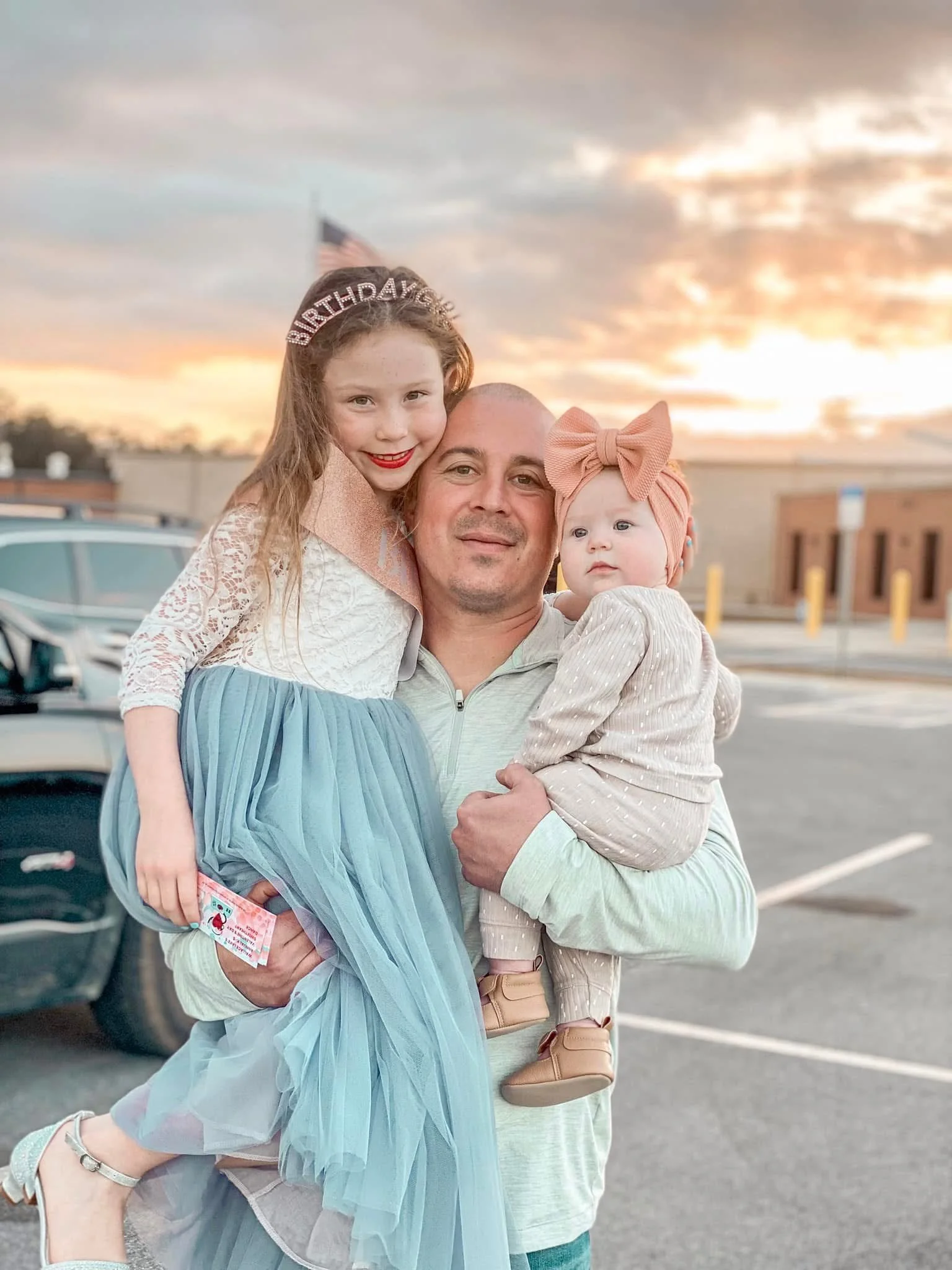
In this interview, we hear from Andres Martin, a husband, a father, and a Marine veteran whose family carries the PSEN1 Jalisco mutation. After his sister found a research article about the mutation, he traced his family’s history of FAD back through generations, and he has been active in research and advocacy on both sides of the US and Mexico border ever since.
In this interview, Courtney, Program Manager at Youngtimers, talks with Andres about:
His family’s history of FAD in Los Altos de Jalisco, Mexico
What he wishes people knew before starting the genetic testing process
The barriers families in Mexico face in reaching research and treatment
The daily habits and hobbies he uses to take control of the disease
Where his optimism comes from, and how his daughters shape it
This conversation reflects Andres’s unique perspectives and experiences as shared with us on November 5, 2025. His story is his own, and it adds a valuable chapter to the diverse narratives within our Youngtimers community.
This transcript has been edited for clarity and readability. For the full interview, watch the video.
COURTNEY: You told me, “If you are a carrier of the genetic mutation, then you have never had a chance to live without Alzheimer’s.” What do you mean by that?
ANDRES: I believe there are two things that can possibly lead to death with the mutation. One is the mutation physically destroying our brain cells. The other is our self and our belief, believing in yourself and being positive. That statement, and my daughters, are why I have a purpose. I was born with this mutation. I lived with it for 30 years without knowing about it, and now, seven years later, it is still the same. I have lived with Alzheimer’s for 38 years.
“I was born with this mutation. I lived with it for 30 years without knowing about it … I have lived with Alzheimer’s for 38 years.”
COURTNEY: For those who may not know your story, can you share your background and your family’s connection with the disease?
ANDRES: My family is from Jalisco, Mexico. Los Altos de Jalisco is kind of the main hub. It has been a mutation that has plagued many generations, and we didn’t know what was going on until recently. My story began when we were in Hawaii, stationed with the Marine Corps. My sister found an article from Dr. John Ringman about the mutation. From that point on we worked backwards, because my father had been dead for many years. We figured out that this mutation is what has been taking our life, and the life of my father, and many generations before then.
COURTNEY: Is that when you started getting involved in clinical research?
ANDRES: It was. I was not aware I had a disease at all. My father had passed away and we were in the blind for many years. Luckily, that article from Dr. John Ringman allowed me to do a reset, understand more about it, contact him, and set up an appointment to do genetic testing.
COURTNEY: Many people in our community face the decision of going through genetic testing. What helped you prepare for that process?
ANDRES: Since you have been living with Alzheimer’s all your life, if you are positive, then you have been prepared for it. That mindset going into it is key. It is probably one of the hardest decisions in your life, but you have been doing it all your life. Prep, think about it. Prep for the worst, and prep to be positive so that you can be ready for it.
Have an action plan afterwards, because you may get the shock right away, which I did. Six or seven hours later, when you come down and understand what is going on, it could go north or south. Be prepared, have loved ones with you.
One of the key things is life insurance. Before you find out whether you are positive or negative, take care of all the background stuff. Life insurance, investments, everything set up. If you test positive, that is going to be documented as you are positive, and there can be legal factors in the future depending on whether you obtained the life insurance before or after the diagnosis. Those are the more administrative things.
If you take care of all the administrative and some of the emotional things beforehand, it sets you up for success afterwards. The biggest thing is that you set up everything administratively and set up everything emotionally.
[Editor’s note: If you plan to secure long-term care insurance, take caution when discussing your family’s history of Alzheimer’s, your FAD mutation, or your Alzheimer’s symptoms with your primary care physician or anyone that has medical records. These records could be requested by the long-term care insurance company, and may make it difficult for you to qualify. Learn more about long-term care insurance.]
Learn more about preparing for testing in our Guide to Genetic Testing.
COURTNEY: How do you raise awareness about research opportunities for friends and family here in the US, and for those in Mexico?
ANDRES: I figured that if I was in the blind here in the US, most likely Mexico would be more in the blind. My goal was to not allow my daughters to have to deal with what we’re dealing with right now. I’m not a doctor, I’m a pilot by trade, but I was able to create a platform where people with the same mutation, either in the US or Mexico, can get information. Not only in regards to medication, but also what the mutation is, what it’s doing, and how to get tested, giving them the power to take control over the mutation versus the mutation taking over them.
COURTNEY: Tell us about the Alzheimer’s Network that you created.
ANDRES: DIAN went to Mexico with us in 2017. We had a good amount of people show up, and it was the beginning of that strategy to create awareness and get control. I started Alzheimer’s Network, which is the [Facebook] page that we started. We do have probably a couple of hundred, almost a thousand people that have been on that page, and it’s been consistent posting for years.
The only problem is that we have given information for many years, but not resources and not a solution, which is the medication for them. Everything has been us meeting, talking to people, and doing the same thing every single year. Until now, which is happening pretty soon in Mexico, we have not been able to give the Mexican communities the resources and the medications to actually impact the disease.
[Editor’s note: DIAN stands for Dominantly Inherited Alzheimer’s Network. It’s an international research partnership of leading scientists who are studying familial Alzheimer’s disease. Learn more about participating in research.]
COURTNEY: What cultural differences do you see between families in the Jalisco region and your own experience with clinical trials in the US?
ANDRES: I think cultural differences, and I’m going to say barriers. In Mexico the major barriers are politics, religion, and economics.
One of the things I have available here in the US is that when I was active duty military, I had the ability to take off work and be paid for it, for my medical appointments and anything I needed to do for Alzheimer’s. In Mexico, the majority of these little towns do not have the economic ability to leave work. They live paycheck to paycheck, and having to go to a city that’s 30 minutes away, or an hour, or two hours away, is equivalent to us traveling cross country when it comes to time and everything. That’s one of the barriers.
The second is politics. Politics in Mexico are keeping these medications from being administered to the Mexican people.
The biggest barrier is religion. Mexico is a very, very, very religious country, rightfully so, and there’s many good to that. When it comes to the disease, I believe we’re not using religion the right way. A lot of people feel that God is going to take care of the disease and take it away. They feel like they go pray, that’s going to be enough, go to church, be a good religious person. I think we’re not using God and his message the right way. God’s gonna put us in front of the right people, which could be Alzheimer’s Network, Dr. Sanchez, the DIAN trial, and those people are gonna take charge of the mutation. We need to be very careful the way we use religion and God, and understand that it’s not just a one-way road. It’s gonna be God and yourself. God is gonna put you in the right place. You gotta take action and help yourself with the disease.
COURTNEY: How are you able to maintain a positive outlook while still balancing the reality of daily life and obligations?
ANDRES: The main part is that I’ve been living with Alzheimer’s all of my life, so I haven’t had a choice. Part of it too is the access to information. Since the beginning, when I found out about it, I wanted to know everything about the mutation. I wanted to know the experts, Dr. John Ringman, DIAN, Dr. Bateman, and all the resources we have. I also found out the doctors that were dealing with the mutation in Mexico, Dr. Sanchez and Dr. Matute in Guadalajara. For me, it was part of life.
Interested in sharing your own story?
Learn more about contributing to our community story series.
I made a decision, whenever I was at the genetic counselor, that I would not let it kill me, for a better term. It’s already trying to take my life away, so I wanted to battle that instead of just being part of the issue.
Another goal for me is probably the simplest way to think about it. I had two daughters at that point. I had one, but now I had two, and I do not want them to be interviewed by you, because that means we’re still dealing with that process. I’m hoping this is the last time someone in my family, generations in the future, will have to do interviews with you. Not because you’re not a great person, it’s just because that means we solved the problem.
My two daughters, there’s something more important than me. You have to find something that’s more important than you. After that, it releases you. It makes you free, because it’s not about you, it’s about someone else. I think that’s being positive. Even if you don’t do anything but just be positive, psychologically and mentally and just your brain, you’re going to be happier and it’s going to slow down the progression. I do feel like we have many things that we can do ourselves. You have to live with Alzheimer’s, and if you don’t, it’s just part of the problem.
“You have to find something that’s more important than you. After that, it releases you. It makes you free, because it’s not about you, it’s about someone else.”
COURTNEY: What are the biggest changes you’ve experienced since you found out about your genetic status?
ANDRES: In 2017 is when I found out. One of my dreams was taken away, which was being a military aviator. That had been my dream since I was a kid. It also gave me life in many different ways. The Marine Corps allowed me to focus on my mutation and my disease. Probably the biggest thing is going to Walter Reed. It’s a national military hospital here in the US, and I was able to find the right doctors that did alternative therapies like TMS [transcranial magnetic stimulation]. They gave me a good baseline for me to understand how I can take control of it, and I just let the process of a medical trial take over for me.
It’s given me a lot of life. I grew up in LA and then Southern California. Mexican kid, skiing was never something within my parameter or my view. Just because of this, I’ve been able to learn how to ski. My wife and I have been to different places in Europe for skiing, and different places in the US. Without that, I never would have had it. There’s been so many activities I’m able to do, so many good people, so many veterans. Valor Initiative is another group that I go with a lot, that do wake surfing.
The biggest thing is giving me time. It seems like it’s counterintuitive, time, but I get to spend more time with my daughters. I can spend more time at home. I control what I do. I know my schedule. Because of that, less stress, better sleep, better quality of life. I’m a farmer now, I would say. I started growing my own microgreens, my own plants. I started making my own yogurt. I started making my own sourdough. I ferment foods that feed my gut and my brain. Without that, I would be an average person flying for the airlines, working all day, stressed out, or a nine to five job if I wanted to do that. I couldn’t do any of these activities with that. Luckily, the military and my retirement allowed me to do that. Just find something that makes you happy. Do something that makes you happy with the kids, with everything. Take initiative, because in reality, it could take time away from us. Prioritize the time that you have available to you.
COURTNEY: You talk about taking control through daily habits. What does that look like in your life?
ANDRES: We talked about taking control and having fun. We will be making another video, because I want to discuss some of the things that I have done. The research I’ve done for me, for myself, just natural foods and stuff like that. I can do good for me. Yogurt and certain things, this is the direct connection from the gut to the brain. This is not a cure for Alzheimer’s, but I know that I’ve done the research to find the foods that are good for my gut and my brain.
An example of the food, apricots actually help with reduction of amyloid. It’s not gonna cure you, but it’s little things that you can do to take control of your life and slow it down. Being happy, that’s probably one of the biggest things. Be happy, cook some food, some yogurt, ferment some foods, play around with your kids. I have a one-year-old that keeps me alive. She pretty much takes all my energy, but I love it. I really don’t think much about the disease. The only times I think about it are when we do interviews, when I have to do my yearly visits in San Diego, and every two weeks when I get my infusions. Other than that, it’s just happiness and joyfulness.
[Editor’s note: Diet, supplements, and lifestyle changes are an active area of Alzheimer’s research. No food has been shown to prevent, treat, or slow familial Alzheimer’s disease, and anyone considering changes like these is encouraged to talk them through with their care team first.]
COURTNEY: Sharing your story has had powerful results. Where do you feel you have made the most impact with your voice?
ANDRES: I would say I have humanized the disease, because if you have a doctor talking about it, it’s not the same. He doesn’t have the disease. He knows it, he doesn’t have it. He hasn’t gone through the things we talked about, life insurance, work, economics. Humanizing the disease and putting the disease in its place. Most people react. I think we have to be proactive and get ahead of it.
Part of the story of success is going to be access to information, being able for someone to message me on Facebook. They don’t have to guess. They already know, when they’re in Mexico, what doctor to go to, or in the US, what doctor to go to, or DIAN. That’s been the biggest gift that we have available as patients, to be provided access.
When we go to these conferences, we all get to see each other, say hello. Something we talked about is, let’s talk about positivity in these conferences. Every time we go there, we do events, we talk about stuff, we cry and we do that. I think we need to have these meetings and talk about how can we help each other, how can we be part of the process instead of just relying on resources to do everything for us.
I realize that I think I can control big factors of this disease. I want to be the first person that gets cured with Alzheimer’s, with a combination of me, my health, and doing things. Fasting, sleeping well, hyperbaric chambers, red light therapy, good diets, knowing what to eat and what not to eat. Part of that is learning how to make these things yourself. Not only are they more beneficial, it keeps you busy, in a good way. Instead of being busy with the disease, be busy helping yourself. I really want to be the first person that does this.
I have opportunities in the future to be the first person with Alzheimer’s to go to space. So two big things. I’ve been able to have the resources, people that work in those agencies, and they said they can try to get me there. I think that’s going to be more of awareness, but my selfish part of it is, I took a genetic test, pretty much checked all my genes, and obviously detected that I have the disease. I read books about how to fight diseases. I don’t know if it’s a cure for this, but it can help the system. I’m eating right. I think I can be the first person to be cured. I think I said it three times, so that’s my goal.
One more thing for me is the genetic test I mentioned earlier. It showed my biological age. I’m 38, and they said I was 28 and a half. I do want to learn more about whether the disease is a biological age disease or a calendar age disease. When I saw those numbers, it gave me a lot of hope. I was expecting to be higher than my age because of the mutation, but it was low. I’ve talked to different neurologists and researchers about which one it is, calendar age or biological age. I’m hoping it’s biological, and if that’s the case, then that means we can control that, the way we eat, the way we sleep, and those external factors. We’ll talk about it more in the future.
COURTNEY: Military personnel tie their identity to their service. How did that change for you when you medically retired?
ANDRES: The two things that the military does offer would be solution-based thinking and thresholds, and they tie into everything else about being positive.
Solution-based thinking for me is, if I’m flying my helicopter and have an engine failure, I can’t cry about it. I need to hurry up and take the extra steps to get that engine back in, or figure out where I can land. I have to communicate and I have to navigate and do everything at once. That training keeps your brain busy, but in a positive way. I did not sit down and rely on people to come to me about Alzheimer’s. I went online and figured out everything I need to know. It took me years, and now I feel like I am in a good place with it. Every birthday, every time you go to one of these meetings, you kind of think about it too. At the end of the day, it’s just finding out what’s the best for you mentally, and again, having a good group of people that can answer your questions.
The next thing was thresholds. One of the greatest gifts is the way I grew up. I grew up in California. I had friends who did good things, bad things, so I was exposed, but I knew if I did a bad thing, I’d get my butt whooped, even though I was at that age. I got to experience a lot of things. On top of that, the military. It takes a lot more for me to be triggered by anything than I would say an average person. When it comes to mental health and Alzheimer’s, it’s probably a good thing, because every time we get stressed, we get angry, we’re influencing our genes in a negative way. Those were the biggest values that I received from my military time.
COURTNEY: You started baking sourdough, and you said that without a starter you can’t fulfill what you need to do. How does that reflect onto living with Alzheimer’s?
ANDRES: It’s your attitude. You set the foundation, which is your starter, for life, for your kids, for yourself, for the disease. Take an initiative. Taking control of the disease is a great thing to do. There’s many ways of doing it. For me, I can learn new things. Not only sourdough, I started doing microgreens. I failed at growing some crops because I just didn’t know about diseases. We talked about my own yogurt. So many things that I’ve been doing by myself, learning. It’s a challenge of learning something new, and the hardest part is to start it.
With sourdough and with sauerkraut, my biggest thing was, start it. One day I had an idea and I wanted to do it, and two weeks passed, and I told myself, what am I doing. I just need to go out there and do it. I made mistakes and it wasn’t perfect, but I guess we are the starter, so we need to initiate the process to be happy, and at that point let the brain do what it needs to do, and a combination of drugs and food. But you can’t do anything in life without a starter, even including sourdough.
““I guess we are the starter, so we need to initiate the process to be happy … You can’t do anything in life without a starter, even including sourdough.””
COURTNEY: A lot of what you do is for your daughters. How does that perspective help you live with the optimism and hope that you have?
ANDRES: It came to me right now that by me being selfish, I’m a better asset to people. I’ve been talking about my yogurt, my sourdough, my plants, my hyperbaric chambers, the therapies that I do. That’s kind of being selfish. It’s for me. That’s the only thing that benefits me. But by me somehow being selfish, it makes me a bigger asset to other people.
My daughters are a big part of me. I don’t want them to deal with this. But if I sit at home and just do a normal life, just forget about the disease and do not do anything to help yourself, then in a way, I am being selfish in the other way, because I’m going to go away from them sooner than later. So be selfish and not be selfish. Does that make sense?
COURTNEY: The optimism and intentionality you bring to life are truly inspiring. Thank you for your time today.
COURTNEY: I know your words will resonate deeply within our community. I did want to mention one quote of yours that I listened to quite a while ago. You said, “If life throws you a shadow, look the other way and find some sun.” That perspective is such a beautiful reminder of resilience and hope, and a powerful reflection of the positivity that you so genuinely share with our community.
ANDRES: Thank you, I appreciate you guys.
Participating in research is especially important for families with genetic mutations that cause familial Alzheimer’s disease (FAD).
Check out the Youngtimers Guide to Participating in Research