
Some of the most valuable and meaningful insights a person can receive when facing familial Alzheimer’s disease (FAD) come from the stories of people within our community.
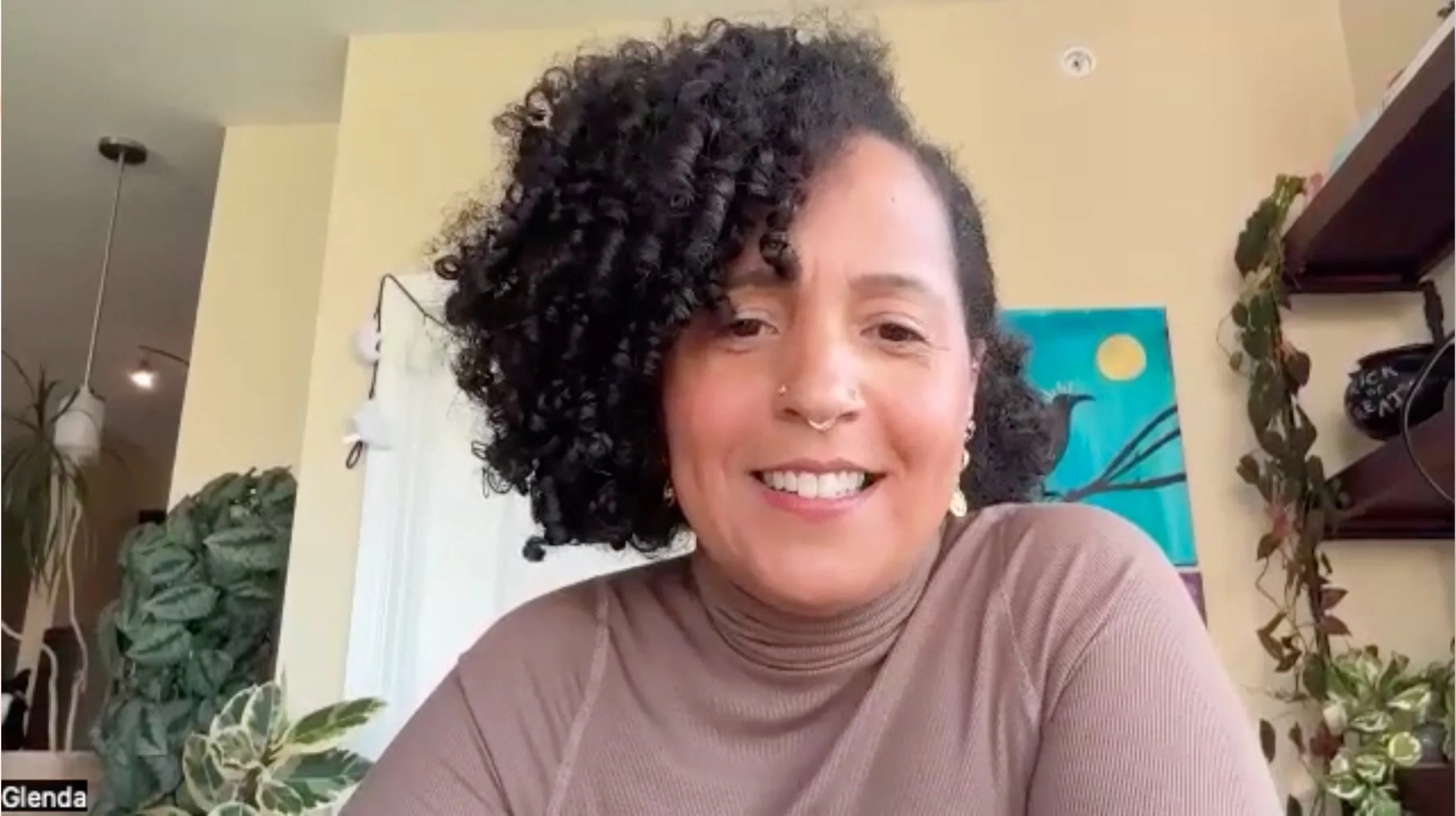
In this interview, we hear from Glenda, a member of the Youngtimers community who lost her father to Alzheimer’s disease when she was 21 and learned, years later, that the disease in her family was inherited. She spent seven months preparing herself before she took the genetic test.
In this interview, Courtney, Program Manager at Youngtimers, talks with Glenda about:
Recognizing symptoms in a second generation of her family
Finding the FAD community, and learning what a genetic mutation would mean for her
The legal, financial, and emotional preparation she did before testing
How she chose to receive her result, and who she had with her
Survivor’s guilt, and staying connected to the community afterward
This conversation reflects Glenda’s unique perspectives and experiences as shared with us on November 21, 2025. Her story is her own, and it adds a valuable chapter to the diverse narratives within our Youngtimers community.
This transcript has been edited for clarity and readability. For the full interview, watch the video.
COURTNEY: Can you tell me about your family history with the disease, and what brought you to the decision about genetic testing?
GLENDA: My father was diagnosed with early onset Alzheimer’s at the age of 49. I was 14 years old at the time. My father died when he was 57. He died in the home that I grew up in, and he lived there throughout his illness. He stayed in the house with us.
[Editor’s note: Early onset Alzheimer’s disease means Alzheimer’s that begins before age 65. Most early onset cases are not inherited. Familial Alzheimer’s disease is the rare inherited form, caused by a mutation in one of three genes: PSEN1, PSEN2, or APP. Learn more in our Guides to Genetic Testing.]
I was 21 years old when he died. Shortly thereafter I joined the police academy, and when I was 22 I became a police officer. Honestly, I tried to put it out of my mind. The memories of that time kept resurfacing and I was deeply, deeply impacted and traumatized by what I witnessed at a young age. But I tried as much as possible to put it out of my mind.
In 2019 I no longer lived in New York City. I live in Maryland. I went up to New York to visit family. I saw my sister, and I saw some things in her that were concerning to me. She was repeating herself and not acting like herself, and I was concerned. I came back home and started doing a lot of research. I started asking Google, is it possible that early onset Alzheimer’s runs in the family? I had no idea. I didn’t know anything about the genes. I didn’t know that it was familial. I knew nothing.
I discovered that there was a gene, or three genes, that cause Alzheimer’s, and I got scared. I got scared and I stopped looking. Again, I tried to put it out of my mind.
[Editor’s note: Members of the Youngtimers community often refer to “the gene.” Throughout this interview, when Glenda refers to “the gene”, she is meaning “a genetic mutation that causes familial Alzheimer’s disease.”]
In February 2020 I received a call from my niece, and she told me that my mother had died. It was terrible, as you can imagine. I was upset and I was grieving, and I grieved for eight hours. Then I got a call back that my mother was not in fact dead, and that my sister was confused and had told everyone that my mother had died.
A little backstory: I had been estranged from my family, from my sister and my mother, for most of the two years prior to 2020, so I didn’t really know what was going on. I went back to New York and I saw my sister, and I knew something was terribly wrong. I looked at her eyes and I saw my father’s eyes when I was a teenager and he was dying. She had just the same look in her eyes. She was repeating herself so much it was impossible to ignore. My niece and my mother were in denial, so they weren’t saying what they were seeing. They were just confused by her behavior.
I immediately got on my phone and Googled doctors, neurologists. I found one at a hospital in New York who gave me an appointment the following week. I came back to Maryland, went back to New York, and took her to the doctor’s appointment. The doctor preliminarily diagnosed her with Alzheimer’s.
I asked the doctor if she had heard about this mutation, this genetic mutation. The doctor said that she had heard of it, but that I shouldn’t be concerned with it because it was extremely rare, and that she had actually never met someone with the gene. She said it’s very rare that it runs in families. I said to her, well, my father had it.
I remember seeing the look of alarm on her face. I said, “why do you look like that?” Because I caught the look, you know? And she said, “no, no, no, no, no. I just, I mean, yeah, it’s rare. It’s rare to see two generations, but don’t think about that right now.” And I couldn’t do that.
Finding the FAD community
GLENDA: I knew that my sister had Alzheimer’s. It was in the back of my mind that there was a potential for this genetic mutation in my family. I came back home and started Googling like crazy. I started Googling so much. I found some Dateline specials on, I think it was the Reiswig family, and then I found an interview that Marty [Reiswig, a co-founder of Youngtimers] had given. I Googled Marty and I found him. I found an email address for him, and he emailed me back. We spoke the next day and I shared what I knew.
Interested in sharing your own story?
Learn more about contributing to our community story series.
What I knew was that my father grew up in Puerto Rico and I had never met my grandparents. I don’t think my father had met his father. I’m not exactly sure, but I had always heard that my father’s mother had been mentally ill and had died very young, and that my father’s five or six siblings had also been very mentally ill and had also died very young. It was kind of like an urban legend in Puerto Rico, because my father’s side of the family also suffered from alcoholism. There was some confusion, I believe, about the alcoholism and the Alzheimer’s.
I shared with Marty that it’s possible that [my father’s] mother and his siblings had been affected, and that I know for sure that my father was diagnosed at a hospital in New York City with early onset Alzheimer’s, and that now my sister had been diagnosed. Marty said that it’s probable. I’ll never forget that word. He didn’t say possible, he said probable. That my family has inherited this gene. I didn’t want to hear that. I wanted to hear something else, you know.
He gave me the number to the office in St. Louis.
[Editor’s note: DIAN stands for Dominantly Inherited Alzheimer’s Network. It’s an international research partnership of leading scientists who are studying familial Alzheimer’s disease. Learn more about Participating in Research.]
I call, and it’s during COVID, and someone answers the phone like they’re at home. Hello? And I was like, hello, did I call the right place? I explained everything to her. All of these people that I’m mentioning, I have a special, special place in my heart for. She was incredible.
I shared my story with her. I shared what I knew and I cried. At this point I was terrified. I was just terrified, and I was constantly crying about the information that I was learning. She explained to me that the doctors meet once a month, I believe, and that she would present my family tree to them if I could complete it. They would inform her whether or not they would agree to accept my sister into the program for testing, because she was symptomatic. If she’s symptomatic, then they can test her. And if she’s positive, then we can enter into the study. They agreed to test her.
All of this is happening from February 2020 to January 2022. In those two years I became my sister’s power of attorney. All her affairs were a mess. She had stopped working and no one had done anything about it, and she needed care. At the same time my mother’s health was declining and she also needed care. She was also developing dementia, unrelated, but dementia, and she couldn’t move back into her home. My mother was placed into a nursing home, and my sister lived in my mother’s apartment with a home attendant.
Late in 2021 my sister was tested. Her disease was progressing. In my family it seems to be an eight or nine year process, the disease. I’ve heard that it’s different with other families. A year made a big difference. It was hard to get her to spit into the cup and retrieve her saliva, but we did it. We mailed it out. And in January 2022 she tested positive for Presenilin 1 [PSEN1].
Leading up to that was a tremendously stressful time for me. In addition to sorting out her affairs, I was praying that she would be negative, because I knew what that would mean for me and for my daughter and for her daughter and my brother.
I have outside help, I have a therapist, and I wasn’t really having a relationship with the genetic counselor yet, because it wasn’t my process. But I knew that I didn’t want to be home to receive my sister’s results. I knew that it was going to be life-changing if it was positive, and I didn’t want to be walking into my apartment and remembering that moment, because it almost felt like it was my result.
That’s how I received the news. It was devastating. I wept, I wailed. I ended up sitting in my car in a parking lot, and I was with my partner. When I received the result, I couldn’t talk and I couldn’t move. I sat in the car for quite a long time. The rest of the day was like someone died, is how it felt. It was tremendous grief.
That’s a long answer. That’s how I got to the point of considering my next steps.
Going into overdrive
GLENDA: In January 2022 I find out that my sister is positive. It was the worst news. I immediately went into overdrive and I thought about the things that I needed to get done. I hired an attorney. I worked on having a will. I got life insurance for my daughter right away, and I got long-term care insurance right away.
I didn’t know about that. Without the Youngtimers group, I would not have known the importance of acquiring long-term care insurance. I had already been a member of the Youngtimers Facebook group and I probably read every single post, and that was one of the biggest takeaways. I’m so grateful for that information. It gave me a lot of peace of mind, because I saw what my sister was going through. She didn’t know, and she wasn’t able to prepare, and [I saw] what I was going through to help her. I didn’t want to put my family through that.
[Editor’s note: If you plan to secure long-term care insurance, take caution when discussing your family’s history of Alzheimer’s, your FAD mutation, or your Alzheimer’s symptoms with your primary care physician or anyone that has medical records. These records could be requested by the long-term care insurance company, and may make it difficult for you to qualify. Learn more in our Guide to Legal and Financial Planning.]
I started going to the monthly Youngtimers Support Group. I love that group so much. I actually miss going to that group, because it was the only place that I felt fully understood. That was such a challenge for me. With other illnesses like breast cancer, there’s so much awareness around some other diseases and not as much for Alzheimer’s. I think that people don’t even really know what it looks like, you know? That used to upset me, that I was facing my mortality and facing a terminal illness diagnosis and no one seemed to get it. I would go in there once a month, I looked forward to it, I put it on my calendar, and it was like an hour that I could just rest, you know.
Learn more about our virtual support groups for the FAD community.
Finding out that there was this genetic mutation in my family that caused Alzheimer’s was such a trigger for me. I had been so traumatized watching my father go through that and not understanding, I was so young. I was 14, I was a girl. He was sick during my teenage years, and my mother did the best that she could, but she didn’t have the capacity to sit me down and explain to me what was happening. I was terrified of the disease. When I learned that I was at risk for it, it was like the worst thing that could happen to me. It was my worst fear.
I was in a constant state of fear. I was in a constant state of panic, and I was chronically stressed, and I developed chronic pain. I think my body was holding onto the stress and I developed pain that had no explanation. I saw a lot of doctors, no one knew why I had pain, but I knew the level of stress that I was under. I still suffer from it. It’s better now, but it’s associated with that.
I shared earlier that my father was an alcoholic. I turned to 12 step programs. I don’t drink, I’m sober myself. I was not an alcoholic, but I learned of a meeting that supports family members of alcoholics, and I was desperate for relief. I went, and it changed my life.
The 12 step program is a spiritual program. During these months I was going twice a day, sometimes three times a day. Thank God for Zoom. There are so many Zoom meetings online. Through the 12 step program I developed a strong living faith, a strong connection with God and with a higher power, and I came to believe that God would take care of me no matter what the result was. I came to learn little by little how to accept life on life’s terms. And I really got the phrase one day at a time.
It connected to my heart, the phrase one day at a time, and I began to live it. When I wasn’t living one day at a time, I was in the future. I was envisioning myself with Alzheimer’s. I started to develop, I think, psychosomatic symptoms, because I was forgetting words. I couldn’t remember my date of birth, my daughter’s date of birth, things that made me think, yes, I have the gene, I know it. I had to keep bringing myself back to the moment. I was only able to bring myself back to the moment over and over by relying on my faith and working these 12 steps that have changed my life.
I got to the point where I couldn’t live with not knowing anymore. It was tormenting me. It was affecting everything. As I shared, I was constantly, constantly weeping over this. I woke up thinking about it and went to bed thinking about it. I thought that receiving the results couldn’t possibly be worse than the torment that I was living, that I was putting myself through wondering whether or not I had the gene.
“I realized that receiving the results couldn’t possibly be worse than the torment that I was living.”
COURTNEY: It sounds like you had yourself convinced that you did have a mutation, and you were living like you did.
GLENDA: I did, and I was. So I tested. I tested in July of 2022.
It was the hardest decision I ever had to make. But once I took the test, waiting for the test wasn’t as hard as I thought it was going to be. I knew that I was as prepared as I was going to be. I talked to Marty the day of. We texted, and he sent me an audio message that I still have and listened to last night, and it was beautiful. I remember I wrote to him, I said, I’m as prepared as I’m gonna be. I can’t be more prepared than I am now, I’m ready. And I was ready. I think that some serenity came from being ready.
Because I allowed myself to feel all the grief over those seven months, I didn’t judge myself for weeping and tell myself to toughen up. I just was sad and scared, and I think I needed that in order to become ready.
Learn how to know when you are ready for genetic testing in our guide: Deciding Whether to Get Genetic Testing.
COURTNEY: You built yourself a community to lean on. Besides Marty, who else did you lean on during that time?
GLENDA: My partner, who is now my husband. It sounds so cliche, but he was my rock. We didn’t live together at the time, and there were days that I was so afraid and I felt like I couldn’t, and that’s so unlike me. Like I shared, I’m a police officer. I would be scared to just be home alone. It felt like the boogie man was coming, and it was. I would tell him and he would come and hold me, and he was so compassionate.
He and I also have a meditation teacher that I love deeply. I met with her once a week and she let me be and feel all the feelings and hold space. I have a 12 step sponsor that did the same thing for me, just listened to me. And the Youngtimers support group, I want to put a plug in for that group. It’s an amazing, special group. We had some deep, profound conversations, and they got me through.
COURTNEY: You had prepared emotionally, and you had your insurance and your plans in place. Tell me about the moment when you got your results.
Where were you, and who was with you?
GLENDA: The people that I mentioned were with me: my partner, my mentor, and my sponsor. I knew again, just like when I received my sister’s result, that I didn’t want to be home. I wanted to be somewhere warm and loving. I drove two hours to my sponsor’s house, and they welcomed me with open arms, literally.
It was on the drive there that I communicated with Marty. That was really special, because he was like my inside person. He was the person that really got it, you know. I really felt like he was with me.
I created a playlist of soothing music that I wanted to have. I got there a couple of hours early. They had set up the space beautifully with flowers and pillows and blankets, just very comforting and soft. My mentor leads meditation, so she led us through a meditation, and I listened to beautiful music, and we hugged and we comforted one another.
I found out later that my husband kept going to the bathroom. He was not well. I did not even notice that. I was so ready. I wish I could go back to that day, when I was so connected to my higher power. I felt so held.
When the call came in, it felt like they were holding me up, because I was sitting on a pillow and they were so close to me, the three of them. One of them held the phone out. I knew I wanted to answer it, I wanted to be the one to hit answer, you know, but I hesitated. They looked at me, and I answered the call.
Leading up to this, I had asked the genetic counselor, who I’ve failed to mention as one of my support people. She was wonderful. I had asked her, please, when you call me, just give me the result. Don’t make small talk.
So I answered the phone and she asked me how I’m doing. And I said, how do you think I’m doing? And then she remembered, I think, because the next thing I hear is, “Glenda, it’s good news.”
They start screaming. My partner starts weeping, wailing. I had never seen him cry up until that day.
And I had no reaction. I was stunned, and I remembered that Marty had told me not to expect myself to have any reaction, to just be. I’m so grateful for that, because I would have judged myself for that reaction. I wanted to scream and I didn’t. They looked at me and I said, “are you sure?” And she said, yes, and your daughter is not at risk.
[Editor’s note: FAD mutations are passed down directly from parent to child. A person who does not carry a mutation cannot pass one on, so their children are not at risk of inheriting it.]
That’s when I lost it. That really brought me back to life and made it all real. It was more crying, more hugs and tears. That went on for a while. Then we went for a walk on a trail, immediately, within 15 minutes. We were like, let’s go out. I really wanted to be in nature and moving, and trying to take it all in and not just stay in my body. So that’s what we did.
COURTNEY: How did you mentally prepare for the results, either way? How did you prepare for the possibility of testing positive?
GLENDA: I shared earlier that my faith was my strength. That was how I was able to get to the point where I thought that I could hear that I had the gene, because I was trusting that God was going to take care of me. That doesn’t mean that God was going to give me the result that I wanted. It means that no matter what the result was, I knew that somehow I would be taken care of and that I would be okay. I knew that whatever it was, it was going to pass, you know? That gave me the strength to say, okay, I can do this. I can hear any outcome.
I also have to say that I started doing research on assisted suicide. I did reach out to an organization in Switzerland to receive more information, and I did receive that information. I didn’t know for sure that that was the path that I was going to take, but it gave me comfort knowing that I had options. Having options gave me the strength to go forward, because if the worst case scenario happened, then I had an option.
If you are facing these questions yourself
Thinking about the end of life is one of the heaviest parts of being at risk, and it is not something anyone should have to carry alone.
Youngtimers keeps a database of mental health professionals who are educated on familial Alzheimer’s disease and understand what this community is navigating.
Email our helpline at info@youngtimers.org to be connected with one.
Being fully prepared logistically with insurances, and considering how I might want to die, and having a lot of conversations with my partner about what it might look like in the future. Would he be able to care for me? Would he be able to stick this out? All of those played a role in preparing myself mentally.
COURTNEY: Now that you have your results, how has that changed your life personally, career-wise, and your plans for the future?
GLENDA: I’ve always, always had an interest in psychology and have been passionate about mental health, but I didn’t have the opportunity to go to school, to college, when I was younger. I had been considering it right before I discovered the genetic mutation, and then I put the brakes on that.
I remember talking to Marty about this and saying, well, if I’m positive, do I go back to school? He gave me such a good answer. He said it depends on your reason for wanting to do it. If you want to go back to school because you want the experience of going to school and learning, then sure. But if it’s for the end results, then you have to think about that. It was honest and it was a great answer, I thought.
When I tested negative, I ran back to school. I enrolled immediately. I got my result in the summer, and in the fall of 2022 I went back to school. In a few weeks I will be graduating from undergrad. I’m the first generation in my family to earn a college degree, and I’m really, really proud of that. I will be going to graduate school in the fall and I’m really, really excited about this. I want to be a therapist, and I think it’s going to happen. I’m really happy about it.
[Editor’s note: Glenda graduated in the fall of 2025.]
I also got married a month ago. That’s something that came up when I was at risk, because I knew I wanted to get married and I knew that he was my life partner. I also knew that he knew that I was at risk. Like I shared before, we had to have those conversations about what the future would look like.
I didn’t want him marrying me because he felt bad for me. That was some distorted thinking that was going on because of all the stress that I was under, but I definitely had that thinking. We had those conversations, and he didn’t propose before I got my result, and that was fine. He proposed at the right time and we got married.
This process has really just changed me from the inside. I’m not the same person that I was before this. I do stop and smell the roses more. I do have a greater appreciation for life. I do notice things that I didn’t used to notice, like a bird flying over me and the color of the leaves on the trees. I notice those things and I didn’t used to. This changed everything.
““I notice things that I didn’t used to notice, like a bird flying over me and the color of the leaves on the trees.””
COURTNEY: How has this result affected the way you approach advocacy and research?
GLENDA: I’m really happy that you gave me the opportunity to share my story with a negative result, because I spent a year and a half really immersed in the community. I went to a conference and I met a lot of people in person, and I was going to the monthly meetings, and I was looking forward to participating in the study.
Then I tested negative, and it felt like I was cut off from the community. No one did that to me, but I felt it, and I think this has to do with survivor’s guilt. I don’t feel like I belong in the community anymore, and I’m worried about making others feel bad because of my results. I haven’t been able to figure out how to continue working in the community. I’m hopeful that maybe one day I’ll come back as a therapist and offer my services. But other than that, I haven’t been able to figure out how to advocate.
COURTNEY: Survivor’s guilt is common in this community, where the risk is a 50/50 coin toss. How has that affected the way you interact with your family? How do you balance gratitude for your own results, and compassion for relatives who did not have the same experience?
GLENDA: It’s been really difficult with my family. It took me quite a few months to even share my genetic status. The remaining family members that are at risk are not ready to test. They’re not doing any research, they’re not preparing themselves, and it gets really challenging for me to accept that.
I have to keep the focus on myself and let them have their journey. I have to remind myself how difficult it was for me. That does help me to be compassionate towards them, because I know just how hard it was. I have to remind myself that their path is different, and they are also grieving my sister, and I’m just letting them.
I have tremendous gratitude, but when I’m around my family I tend to hide it. I don’t celebrate it. I don’t talk to them about it. That’s hurtful to me, but then I bring it back to compassion, and then I’m able to settle myself.
COURTNEY: Knowing this information, and being able to connect others with it, makes you an advocate already. You are always welcome in this community.
GLENDA: I want to say that my testing experience was deeply, deeply personal. I remember that my husband thought I was moving too quickly through the process, and later on I came to find out that there were others that had the same thoughts, but they didn’t share them with me.
No one’s really going to know outside of you when the right time is to test. No one knows how it is to walk in your shoes and be at risk and know that you might be having a terminal disease that you’ve witnessed and that is devastating. So do what’s right for you. It might take years for you to decide to get tested, and it might take months or weeks. Just follow your gut and intuition, and don’t worry about what anyone else says.
Genetic testing is especially important for families with genetic mutations that cause familial Alzheimer’s disease (FAD).
Check out the Youngtimers Guides to Genetic Testing