What fearlessness really looks like |
|
|
We support people impacted by familial Alzheimer’s disease with community, education and advocacy. |
|
|
Hi there,
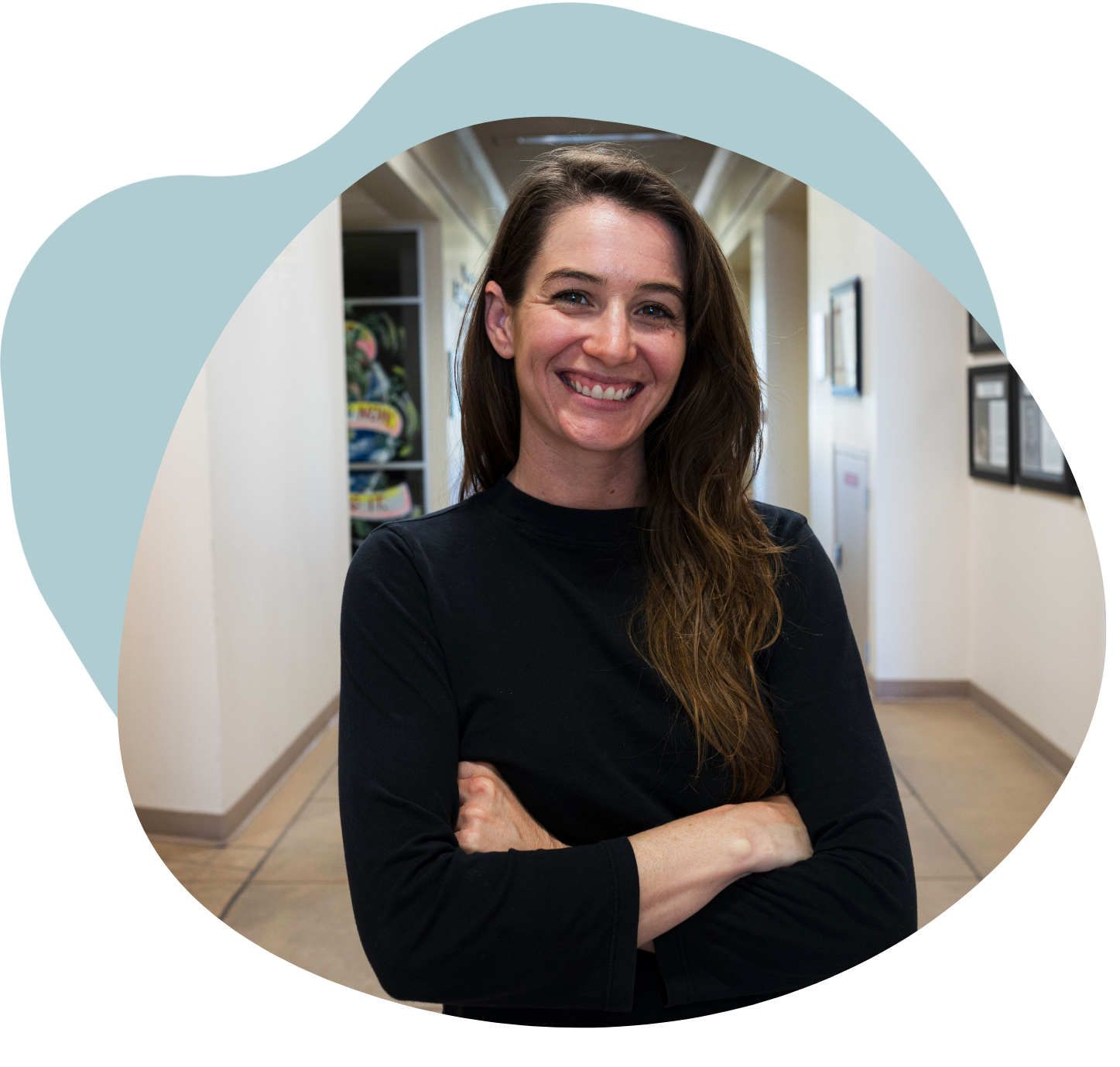
Can I tell you a secret? I’m actually a very fearful person.
You probably wouldn’t guess it. Not if you saw me doing backbends on a balance beam as a kid, or packing up after college to move to the middle of nowhere in Montana for an NIH research lab. Not if you knew I made two big international moves in my 20s and 30s. Or that in the summer I clip into a rope and climb rock faces, and in the winter I point my skis down black diamond runs.
It might look like fearlessness. But the truth is—I’m terrified every time. Terrified to fall. Terrified to fail. Terrified I’ve made the wrong decision. And yet, I keep going.
Recently, I channeled more of that "fearlessness" energy—and was interviewed for NPR about our community and the critical role families play in advancing Alzheimer’s research. If you’d like to listen, you can find the story here.
I’m sharing all of this not to sound brave, but because I don’t think I’m alone. Being in this community and facing familial Alzheimer's disease is terrifying. The uncertainty, the decisions, the weight of what could come—it’s a lot. And still, I see so many of you choosing to face it head-on. Choosing to learn your genetic status. Choosing to attend a family conference. Choosing to join a clinical trial. Choosing to show up to a support group. Choosing to engage and speak out, even when others stay silent.
That is what fearlessness really looks like. Not the absence of fear—but the decision to move forward anyway. To wake up, be brave, and do the terrifying thing. And what an honor it is to be part of this fearless Youngtimers community. |
|
|
Thur, May 21, 2026 at 11am CT | 12pm ET | 9am PT (US) What does it actually feel like to live with early-onset Alzheimer’s disease, and what happens when treatment starts working? Mike Zuendel, founder of the Initiative to Change the “D-Word”, was diagnosed with MCI due to Alzheimer’s and has been on anti-amyloid therapy with remarkable results. In this community conversation, Mike shares what early symptoms felt like, how he knew the drug was working, and what life looks like when treatment may be keeping the disease at bay. For families living with familial Alzheimer’s disease, this is a hopeful glimpse into what this new era of treatment can mean. |
|
|
A Milestone for the FAD Community |
On December 10, 2025, Youngtimers organized the first-ever FDA Patient Listening Session dedicated to familial Alzheimer's disease - bringing nine community advocates, scientific experts, and staff from 20 FDA departments together to make the case for early access to approved treatments.
This was a landmark moment for our community's voice in the drug development process, and the FDA's Office of Neuroscience responded positively, saying these perspectives would directly inform their regulatory work. Read it, share it, and help us spread the word - every person who sees this story helps amplify our community. |
|
|
Caregivers (All Stages): Sat, April 18 at 12pm CT (US) At-Risk/Asymptomatic: Sun, April 19 at 2pm CT (US)
Symptomatic: Wed, April 29 at 4:30pm CT (US) Caregivers (Early Stage): Tue, April 21 at 3pm CT (US) |
| |
|
For more options, visit our support group page. It includes support groups from other organizations, such as a Spanish-speaking support group and groups for teens and young adults. |
|
|
“I [finally feel like] I’ve found a place where I don’t have to explain what it feels like to be in my situation. The complexities of it all are understood.” ... “Having (this) group (of people who are) actually in our shoes, is invaluable.” |
- Youngtimers Community Member |
|
|
This paper looks at how presenilin may influence the cell’s internal recycling systems that keep tau from accumulating. The findings suggest that in familial AD, breakdowns in these cleanup pathways could help push tau toward aggregation and spread. (Acta Neuropathologica Communications) |
|
|
Researcher and professor, Bart De Strooper, lays out Alzheimer’s as a six-stage process and argues that treatments need to be matched to disease stage, rather than used as if every brain is in the same phase. In this model, the most important turning point is when amyloid-driven stress tips into tau pathology, because that may be the last best chance to stop broader damage before neuron loss spreads. (AlzForum) |
|
|
Researchers found early chromatin-accessibility changes in neurogenic cells in people with preclinical Alzheimer’s, with stronger disruption in Alzheimer’s disease itself. This suggests the brain’s ability to support new hippocampal neurons may begin to shift before full clinical decline is obvious. (Nature) |
|
|
Advocacy Opportunity - United for Cures |
Your voice has power, and this is your chance to use it in Washington, D.C.
UsAgainstAlzheimer's is sponsoring a Lobby Day on May 19–20 through United for Cures, a pan-disease coalition fighting to increase overall funding for medical research. They're looking for advocates in select states and districts, and for those chosen, all travel, lodging, meals, and incidentals are covered. Care partners are welcome too.
Target states include Alabama, Connecticut, Florida, Georgia, Iowa, Maine, Michigan, Ohio, Oklahoma, Tennessee, Washington, West Virginia, and Wisconsin. Interested? Email Courtney at courtney@youngtimers.org and she'll share everything you need to take the next step. |
|
|
Alzheimer's Research Opportunities |
|
|
Dr. Suzee Lee at UCSF is interested in understanding brain development in children from families with a history of Alzheimer’s disease. If you’re interested, contact the study coordinator at familyNDstudy@ucsf.edu. |
| |
|
The Dominantly Inherited Alzheimer Network (DIAN) is currently recruiting people who carry or may carry an FAD mutation to better study the disease and brain changes over time. If you’re interested, contact dianexr@wustl.edu. |
|
|
The DIAN-Trials Unit (DIAN-TU) is now enrolling participants who are -25 to -11 years from their predicted age of Alzheimer's cognitive symptom onset to test a study drug (remternetug) for effectiveness in delaying or preventing Alzheimer disease. If you’re interested, contact dianexr@wustl.edu. |
|
|
You are being sent this email because you are a subscriber. If you wish to update your Email Preferences or Unsubscribe, click *{{Unsubscribe}}* |
|
|
|