Real News vs. Noise: What the Data Actually Shows |
|
|
|
We support people impacted by familial Alzheimer’s disease with community, education and advocacy.
|
|
|
|
Hi there,
There’s always a lot of noise in the Alzheimer's space. Well-meaning friends forward articles about supposed breakthroughs. Social media serves up clickbait headlines. Supplement aisles are lined with products that claim to prevent dementia. And every so often, a voice pops up to say, "Past research has failed, we need to try something new."
All of this can be confusing and unsettling for those of us who are in or considering clinical trials, or who love someone facing familial Alzheimer's disease (FAD). But what the current data actually shows is very hopeful. The research happening in our FAD community continues to be some of the most promising work in the entire field.
We'll be digging into all of this on Thursday, May 21, during the virtual event: Something to Hope For: One Person's Journey with Anti-Amyloid Therapy. In this inspiring session, we’ll hear from Mike Zuendel, a person who was diagnosed with MCI due to Alzheimer's and has been on anti-amyloid therapy with remarkable results.
The next time you see an Alzheimer's headline that gives you pause, ask yourself a few screening questions: |
-
Was it based on human studies, or was it animal or lab research?
- Does this research apply to familial Alzheimer's specifically, or to sporadic cases?
- Is the journal reputable and peer-reviewed?
- How current is the data? Is this new research, or is it pooling work from many years back?
|
Those four questions can help you separate real news from noise. As always, you are not alone in this. We're in it together. |
|
|
|
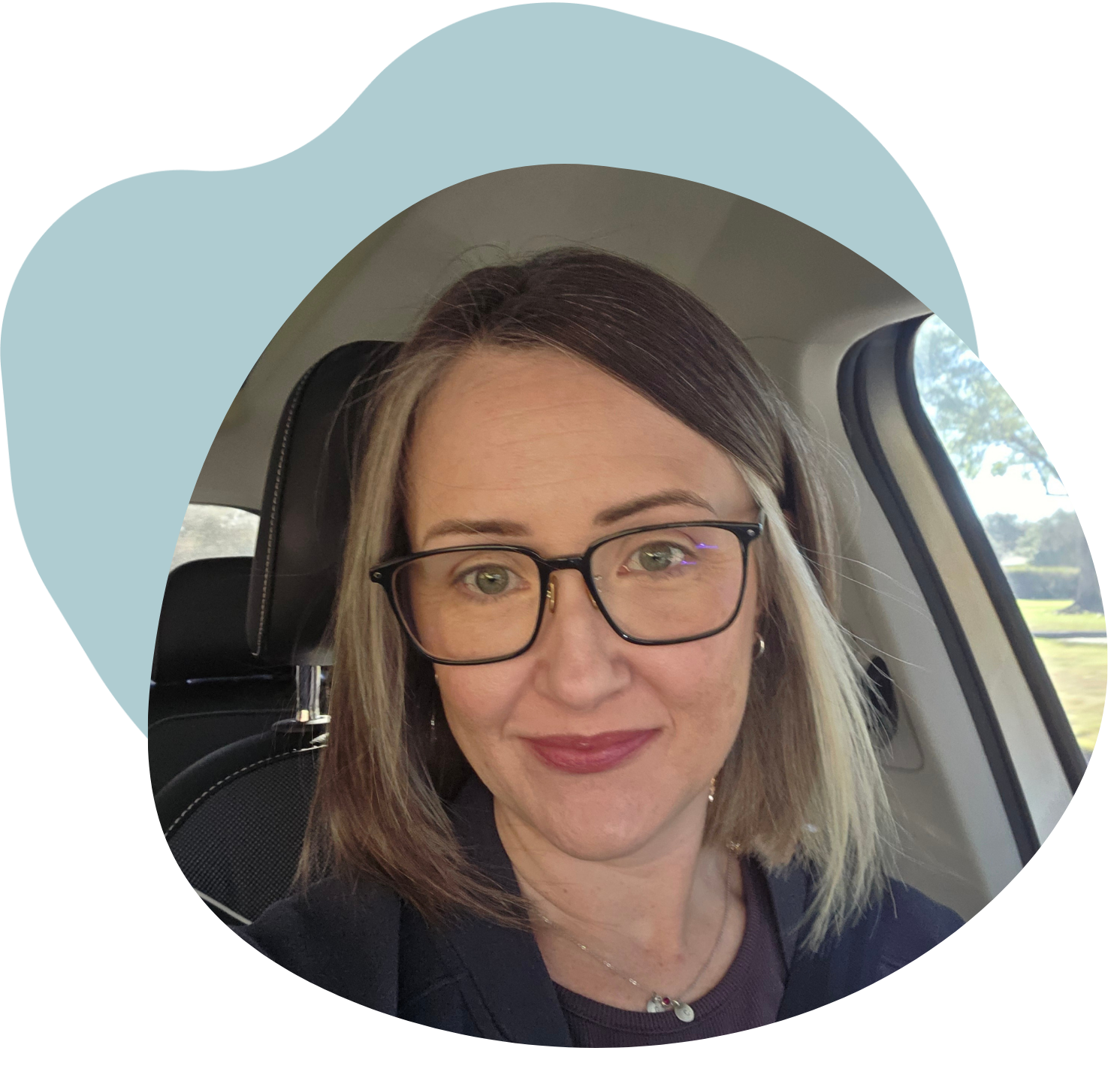
| Erin Young
Board Member & Volunteer |
|
|
|
Thur, May 21, 2026 at 11am CT | 12pm ET | 9am PT (US) What does it actually feel like to live with early-onset Alzheimer’s disease, and what happens when treatment starts working?
Mike Zuendel, founder of the Initiative to Change the “D-Word”, was diagnosed with MCI due to Alzheimer’s and has been on anti-amyloid therapy with remarkable results. In this community conversation, Mike shares what early symptoms felt like, how he knew the drug was working, and what life looks like when treatment may be keeping the disease at bay. |
Wed, May 28, 2026 at 1pm CT | 2pm ET | 11am PT (US) One of the hardest decisions families face: choosing a long-term care facility for a loved one.
The session covers key differences between care settings (assisted living, skilled nursing, memory care), what questions to ask before placement, and how to advocate for your loved one after the move. This webinar is especially relevant for caregivers and families who are planning ahead. |
|
|
|
Research Opportunity for Caregivers |
The Center for Health Outcomes and Interdisciplinary Research (CHOIR) and the Frontotemporal Disorders Unit at Massachusetts General Hospital in Boston, Massachusetts is researching behavioral intervention to reduce emotional distress among caregivers and their loved ones facing young onset dementias (including those with DIAD).
This study is for you if you or someone you love has been diagnosed with young onset cognitive impairment or dementia in the last 6 months and want help managing stress. Study participation involves 7 virtual sessions with a clinician, through Zoom.
Learn more details on their website or email mghresilienttogetheryod@mgb.org with questions. |
|
|
|
Caregivers (All Stages): Sat, May 16 at 12pm CT (US) At-Risk/Asymptomatic: Sun, May 17 at 2pm CT (US) Symptomatic: Wed, May 27 at 4:30pm CT (US) Caregivers (Early Stage): Tue, May 19 at 7pm CT (US) |
|
| |
|
For more options, visit our support group page. It includes support groups from other organizations, such as a Spanish-speaking support group and groups for teens and young adults. |
|
|
|
“I did join the group this evening and boy am I glad I did! [The facilitator] was great! I look forward to being there [next month]. First time I felt like I was in the right support group since my whole odyssey started.” |
- First time attendee of a Youngtimers support group |
|
|
|
Using a human neuromuscular-junction lab model, researchers found that FAD mutations in motor neurons caused functional deficits in the connection between nerves and muscle. This suggests that some motor symptoms in Alzheimer’s may arise outside the brain itself. (Alzheimer's & Dementia) |
|
| |
In a Swedish primary-care cohort of people with sporadic AD and cognitive symptoms, only about 13–14% met eligibility criteria for lecanemab or donanemab. Unfortunately, access to treatment depends on more than an Alzheimer’s diagnosis: stage, biomarkers, MRI findings, medications, and other health conditions all impact eligibility. (Alzheimer's Research & Therapy) |
|
|
|
In eight people with dominantly inherited Alzheimer’s disease, etalanetug (aka E2814) reduced CSF p-tau217 and MTBR-tau243, biomarkers connected to tau pathology. This is good news for those on the DIAN NexGen trial as well as the broader community as it may provide a promising path toward halting disease pathology if used in conjunction with an anti amyloid treatment. (Alzheimer's Research & Therapy) |
|
|
|
Gauging Interest: In-Person FAD Community Gathering |
Youngtimers co-founder Alicia would like to warmly invite members of our community to join for a three-day retreat and workshop created for individuals whose lives have been shaped by familial Alzheimer’s disease. "When I learned I carried a PSEN1 mutation, I found myself searching for how to move forward and continue creating a meaningful life while living alongside uncertainty. Along that journey, I attended a wonderfully dynamic workshop called Designing the Life You Want, which became an important catalyst for reflection, recalibration and moving forward.
Inspired by that experience, this gathering is being created for members of our community, including those who carry an FAD mutation, individuals who do not know their genetic status, caregivers past and present, and those beginning to navigate early symptoms while still living independently.
Held among the redwoods approximately one hour south of San Francisco and 20-30 minutes from San Jose, CA, the retreat will offer space for facilitated meaningful conversation, community connection, reflection and deep rest. Familial Alzheimer’s disease can be profoundly isolating, and this program is designed to create an opportunity for people to come together in person and feel less alone in this experience." - Alicia |
- Guest arrival and check-in will begin at 2:00 PM on Tuesday, January 5th
- Opening retreat programming will begin at 4:00 PM
- Workshop sessions will take place Wednesday morning and late afternoon, as well as Thursday morning
-
The retreat will conclude after lunch on Thursday, January 7th
|
-
Lodging, food, and workshop expenses and room will be covered for participants
- Funding for travel (flights) within the US will be made available for participants on an as needed basis. Please let me know if you think you will be accessing financial support for your travel
|
If this gathering speaks to you, please reach out to Alicia at aliciabrasch@gmail.com by May 23rd so I can plan and confirm the retreat with the center. |
|
|
|
CAREGIVING
Caregiver Creativity: How one caregiver uses everyday tasks to bring her loved one purpose and joy. |
QUOTE
"It's a great kindness we can offer ourselves, even for a moment. To let yourself just be here, as you are. Let yourself stop becoming more, better, or different." |
|
| LIFESTYLE
Eating well is one of the most powerful ways to support our overall brain health and quality of life. The Mediterranean diet is one of the most researched lifestyle factors in cognitive health. Check out this guide for a simple budgeted meal plan to get you started. 30-Day Mediterranean Meal Plan |
|
|
|
Alzheimer's Research Opportunities |
|
|
|
Dr. Suzee Lee at UCSF is interested in understanding brain development in children from families with a history of Alzheimer’s disease. If you’re interested, contact the study coordinator at familyNDstudy@ucsf.edu. |
|
| |
|
The Dominantly Inherited Alzheimer Network (DIAN) is currently recruiting people who carry or may carry an FAD mutation to better study the disease and brain changes over time. If you’re interested, contact dianexr@wustl.edu. |
|
|
|
The DIAN-Trials Unit (DIAN-TU) is now enrolling participants who are -25 to -11 years from their predicted age of Alzheimer's cognitive symptom onset to test a study drug (remternetug) for effectiveness in delaying or preventing Alzheimer disease. If you’re interested, contact dianexr@wustl.edu. |
|
|
|
You are being sent this email because you are a subscriber. If you wish to update your Email Preferences or Unsubscribe, click *{{Unsubscribe}}* |
|
|
|