Reflecting on shared experiences |
|
|
|
We support people impacted by familial Alzheimer’s disease with community, education and advocacy. |
|
|
|
Hi there,
One of the things I look forward to most each year is the DIAD Family Conference. It feels deeply meaningful to be in a room with others whose lives have been shaped by familial Alzheimer’s disease. It is a reminder that none of us are carrying this journey alone. Alongside that sense of connection, hearing the latest research always leaves me with renewed hope.
To witness the dedication of scientists who have devoted years, and in many cases decades, to understanding this disease and developing treatments is incredibly moving. I was especially touched by the keynote address which reflected not only scientific excellence but also a deep compassion for families living with familial Alzheimer’s disease. That combination of expertise, commitment, and humanity is something I will carry with me long after the conference has ended.
For those who weren’t able to attend this year, I hope you’ll join us in the Youngtimers Virtual Support Groups in the months ahead. They continue to be a wonderful way to reconnect, welcome new faces, and remind one another that this community extends far beyond a single conference. |
|
|
|
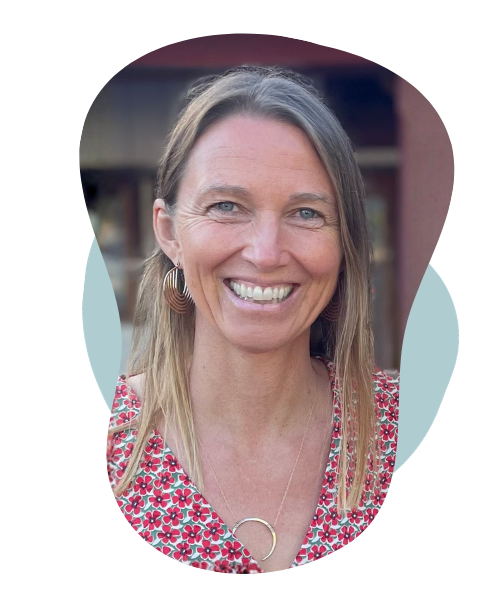
| Alicia Cofounder & Volunteer |
|
|
|
Thursdays | 10:00am CT
Pop in to connect with others in this weekly, come-as-you-are virtual space for anyone in the Youngtimers community. This relaxed gathering has no agenda and no expectations - just an open hour to connect, talk, listen, or simply be together. |
|
|
|
Finding Laughter Through Alzheimer's |
When her mother was diagnosed with Alzheimer's and slipped into depression, this longtime comic and UCLA stand-up instructor couldn't get her to laugh. In this TEDx talk, she draws on 30 years in comedy and 30 years as a daughter to share the specific tools that cut through isolation and open real connection, even on the hard days. |
|
|
|
Caregivers (All Stages): Sat, Aug 15 at 12pm CT (US) At-Risk/Asymptomatic: Sun, Aug 16 at 2pm CT (US) Symptomatic: Wed, July 29 at 4:30pm CT (US) Caregivers (Early Stage): Tue, Aug 18 at 7pm CT (US) |
|
| |
|
For more options, visit our support group page. It includes support groups from other organizations, such as a Spanish-speaking support group and groups for teens and young adults. |
|
|
|
Living with Alzheimer’s? Consider signing this open letter. |
Voices of Alzheimer's has published an open letter to CMS Administrator Dr. Oz, responding to claims that new anti-amyloid treatments don't work or are too risky to justify broader access. The letter is signed by patients diagnosed early enough to receive treatment, who describe regaining independence, returning to work and hobbies, and gaining more time with family.
They're calling for expanded access to blood-based diagnostics, better-prepared primary care doctors, and fewer insurance and Medicare barriers to treatment. If you are someone who has benefited from early detection and treatment, consider adding your voice. |
|
|
|
As biomarker testing and disease-modifying treatments become more available, experts say patients and caregivers need understandable information about likely benefits, ARIA risk, treatment burden, and remaining uncertainties. Major questions remain about who benefits most, how long treatment should continue, what happens after amyloid is removed, and how to provide equitable access to testing and care. (Alzheimer's & Dementia) |
|
|
|
In members of a Colombian family with a PSEN1 mutation, weaker structural integrity in a pathway connecting the locus coeruleus to the entorhinal cortex was associated with more tau and poorer memory. The connection was also related to memory among carriers who were still cognitively unimpaired, suggesting a possible early marker. (Alzheimer's & Dementia) |
|
|
|
The neuroscience clinic reduced risk through APOE testing, scheduled MRIs, extra monitoring after ARIA, and pausing treatment when needed. A pre-infusion mix of acetaminophen, loratadine, and famotidine was associated with fewer reactions—45.2% versus 28.3%—though causation and applicability to FAD families remain uncertain. (The Journal of Prevention of Alzheimer's Disease) |
|
|
|
FAD advocate honored posthumously for "immeasurable" impact on research | |
|
|
Carol Jennings has been awarded a posthumous honorary doctorate from UCL. Her decision decades ago to volunteer as a research participant led directly to the discovery of the protein now recognized as a hallmark of Alzheimer's disease. |
|
| |
|
QUOTE "Success is no accident. It is hard work, perseverance, learning, studying, sacrifice, and most of all, love of what you are doing."
— Pelé |
|
| RESOURCE FOR CAREGIVERS Care T.I.P.S. Series
Short for Try Including Practical Strategies, from Banner Health |
FILM
'Tangles' Julia Louis-Dreyfus, Seth Rogen, and Bryan Cranston tackle Alzheimer’s in this Cannes-Bound animation |
|
|
|
Alzheimer's Research Opportunities |
|
|
|
Mass General Hospital and Harvard Medical School are testing a coping and support program for individuals recently diagnosed with young-onset cognitive impairment and their care partners. If you're interested, contact mghresilienttogetheryod@mgb.org
|
|
| |
|
Dr. Suzee Lee at UCSF is interested in understanding brain development in children from families with a history of Alzheimer’s disease. If you’re interested, contact the study coordinator at familyNDstudy@ucsf.edu. |
|
|
|
The Dominantly Inherited Alzheimer Network (DIAN) is currently recruiting people who carry or may carry an FAD mutation to better study the disease and brain changes over time. If you’re interested, contact dianexr@wustl.edu. |
|
|
|
The DIAN-Trials Unit (DIAN-TU) is now enrolling participants who are -25 to -11 years from their predicted age of Alzheimer's cognitive symptom onset to test a study drug (remternetug) for effectiveness in delaying or preventing Alzheimer disease. If you’re interested, contact dianexr@wustl.edu. |
|
|
|
“I am forever grateful to this special organization. It provided me community and hope, and it enabled me to plan, both for the practical and the emotional. I no longer felt lost and alone in confronting this disease. Thank you Youngtimers!” |
-Youngtimers Community Member |
|
|
|
You are being sent this email because you are a subscriber. If you wish to update your Email Preferences or Unsubscribe, click *{{Unsubscribe}}* |
|
|
|