Making sense of biomarkers |
|
|
|
We support people impacted by familial Alzheimer’s disease with community, education and advocacy. |
|
|
|
Hi there,
It took roughly 20 years to go from discovering the first gene that causes FAD to having an FDA-approved PET scan that could measure amyloid in the living brain. Today, things are moving much faster. Individuals can now get metrics on what is happening in their brain years before changes are visible to them or anyone else - thanks to biomarkers.
If you've ever had your thyroid tested, your blood sugar checked, or been told your cholesterol is high, you've encountered biomarkers. They're simply measurements that tell us something about what is happening biologically. In Alzheimer's, we can now measure markers of amyloid, tau, and nerve cell damage. For families living with a mutation, that puts information, and maybe even a little control, back in their hands.
But there's a catch. Even very good biomarkers aren't perfect gauges for one specific person. Most cutoffs are based on averages from large groups, and an individual result comes with natural biological and measurement variation. For example, NfL is an excellent marker of nerve cell damage, but it can't tell us what caused that damage, and blood levels can shift with things like hydration.
That "noise" can make tracking biomarkers feel like an emotional roller coaster. Some people would rather play the ostrich and ignore them. Others want as much visibility as possible, even when the numbers don't give perfectly clear answers. To help, Youngtimers has two workshops coming up. |
-
On October 20, Jalayne Arias explains how GINA protects your genetic information and where biomarker testing fits in. Sign up here.
-
On November 4, Dr. Eric McDade and Dr. Suzanne Schindler cover what blood biomarkers can and can't tell us, while Marty and I share what it is like to be on the receiving end of those results. Sign up here.
|
|
|
|
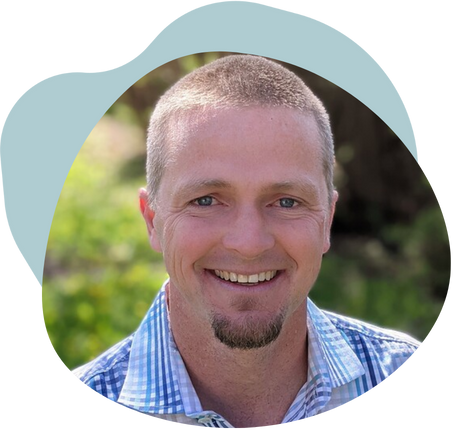
| Phil Board Member & Volunteer |
|
|
|
Tuesday, October 20 | 11:00am CT GINA provides meaningful protections for genetic information. What does that mean? And how does new blood biomarker testing fit in? Join us for a live virtual workshop with Jalayne J. Arias, JD, MA, Associate Professor at Georgia State University's School of Public Health, to learn about all this and more. Send questions in advance to courtney@youngtimers.org. |
|
|
|
Wednesday, November 4th | 9:00am CT Blood tests for Alzheimer's are moving fast, and more FAD families are asking what results actually mean. Join us for a live workshop with researchers Dr. Eric McDade and Dr. Suzanne Schindler, alongside FAD community members Phil and Marty, moderated by Youngtimers co-founder Lindsay.
We'll cover what markers like p-tau217, NfL, and GFAP can and can't tell you, plus the real experience of deciding whether to test and living with the results. Submit any questions in advance to courtney@youngtimers.org. |
|
|
|
Eisai Honors Your Contributions |
Eisai U.S. Neurology recently shared a post recognizing their partnership with Youngtimers and the FAD community. They highlighted that research in families like ours offers a unique window into how the disease develops before symptoms begin, and that partnering with patient communities is essential to advancing biomarkers and treatments. It’s a meaningful reminder that the research world sees the value of what our community gives. The blood samples we’ve given, the trials we’ve joined, the hours we’ve spent answering questions about our family histories are all moving the field forward. That’s something to be proud of, together.
|
|
|
|
NEW!
Clinical Trial: Thurs, Oct 29 at 3:30pm CT (US) Caregivers (All Stages): Sat, Oct 17 at 12pm CT (US) At-Risk/Asymptomatic: Sun, Oct 18 at 2pm CT (US) Symptomatic: Wed, Oct 28 at 4:30pm CT (US) Caregivers (Early Stage): Tue, Oct 20 at 7pm CT (US) |
|
| |
|
For more options, visit our support group page. It includes support groups from other organizations, such as a Spanish-speaking support group and groups for teens and young adults. |
|
|
|
Brain Health Journey: Free Interactive Resource |
UsAgainstAlzheimer’s recently launched the Brain Health Journey, a free, interactive tool for people with cognitive changes and their care partners. The tool provides customized actionable information, guidance on common questions, and links to trusted resources. It assists users in taking charge of their healthcare journey, managing their care, enhancing their quality of life, and achieving the best possible outcomes.
|
If you check it out, we'd love to hear your feedback. Is this tool helpful for FAD families? Email us at info@youngtimers.org and share your thoughts. |
|
|
|
The FDA has cleared C2N’s PrecivityAD2 blood test, which combines measurements of amyloid and pTau217 to help identify Alzheimer’s related amyloid pathology in people with cognitive symptoms as young as 40. While it is not yet intended for screening symptom free FAD carriers, bringing an Alzheimer’s blood test into this younger age range is an important step toward making early detection much easier. (c2n) |
|
|
|
The FDA has cleared Roche’s Elecsys pTau217 blood test to help identify Alzheimer’s related amyloid pathology in people 55 and older with cognitive concerns. Because the test can run on thousands of Roche laboratory systems already in use across the U.S., pTau217 testing could become much easier to access outside specialized Alzheimer’s centers. (Roche) |
|
|
|
Researchers studying autosomal dominant Alzheimer’s found that different blood biomarkers begin changing in a remarkably orderly sequence - from Aβ42 roughly 26 years before expected symptoms to NfL about 6 years before. These findings suggest that a panel of simple blood tests could eventually help stage presymptomatic FAD and determine when preventative treatments or clinical trials may have the greatest opportunity to work. (Journal of Neurology, Neurosurgery & Psychiatry) |
|
|
|
Designing the Life You Want : In Person Gathering |
Members of the Dominantly Inherited Alzheimer’s community are invited to Designing the Life You Want for Those Who Have Been Shaped by Familial Alzheimer’s Disease, January 5–7, 2027.
Held at 1440 Multiversity in Scotts Valley, California, the gathering offers reflection, connection, and personal growth. Lodging and the workshop are complimentary, with travel assistance available based on need. DIAN researchers, in collaboration with Youngtimers, are studying the gathering’s effects on well-being and mental health. Research participation is optional.
Contact Alicia Brasch at fadretreat@gmail.com. |
|
|
|
QUOTE
"Things are as they are. Suffering arises when we imagine it differently." -Thich Naht Hahn |
RESOURCE Caring At Home The Alzheimer's Foundation of America has put together helpful tips for care partners who are caring for a loved one at home. |
|
| |
|
Alzheimer's Research Opportunities |
|
|
|
Researchers are seeking unpaid caregivers (spouses, parents, friends) of someone living with early-onset memory and thinking changes to share their experiences. Eligible participants will complete a 10-15 minute questionnaire, and those selected will take part in a one-hour online interview. |
|
| |
|
Mass General Hospital and Harvard Medical School are testing a coping and support program for individuals recently diagnosed with young-onset cognitive impairment and their care partners. If you're interested, contact mghresilienttogetheryod@mgb.org |
|
|
|
The Dominantly Inherited Alzheimer Network (DIAN) is currently recruiting people who carry or may carry an FAD mutation to better study the disease and brain changes over time. If you’re interested, contact dianexr@wustl.edu. |
|
|
|
The DIAN-Trials Unit (DIAN-TU) is now enrolling participants who are -25 to -11 years from their predicted age of Alzheimer's cognitive symptom onset to test a study drug (remternetug) for effectiveness in delaying or preventing Alzheimer's disease. If you’re interested, contact dianexr@wustl.edu. |
|
|
|
"The whole field owes a huge debt to family members who participated in research from dominantly inherited families.” |
|
|
|
You are being sent this email because you are a subscriber. If you wish to update your Email Preferences or Unsubscribe, click *{{Unsubscribe}}* |
|
|
|